Rethinking Creator Economies: How to Bring Your Audience Onchain

Summary
Web3 is changing who controls the internet, and creators are at the center of it. This report reveals how ownership, monetization, and engagement combine to form a powerful flywheel that lets creators grow, sustain, and retain their audiences onchain. Through real-world case studies, emerging models, and tactical insights, we explore how creators are becoming the distribution engines of Web3 and what it takes to build systems that reward both them and their communities.
It’s hard to ignore the creator economy. With ~2M professional creators generating $32B in 2024 and market size projections reaching $117B by 2034, we’re witnessing the rise of a new economic paradigm for creators.
But here’s the key thing to understand: Web2 platforms are failing creators. For most of them, reaching just $1,000 monthly requires a lot of work. Just look at the stats below.
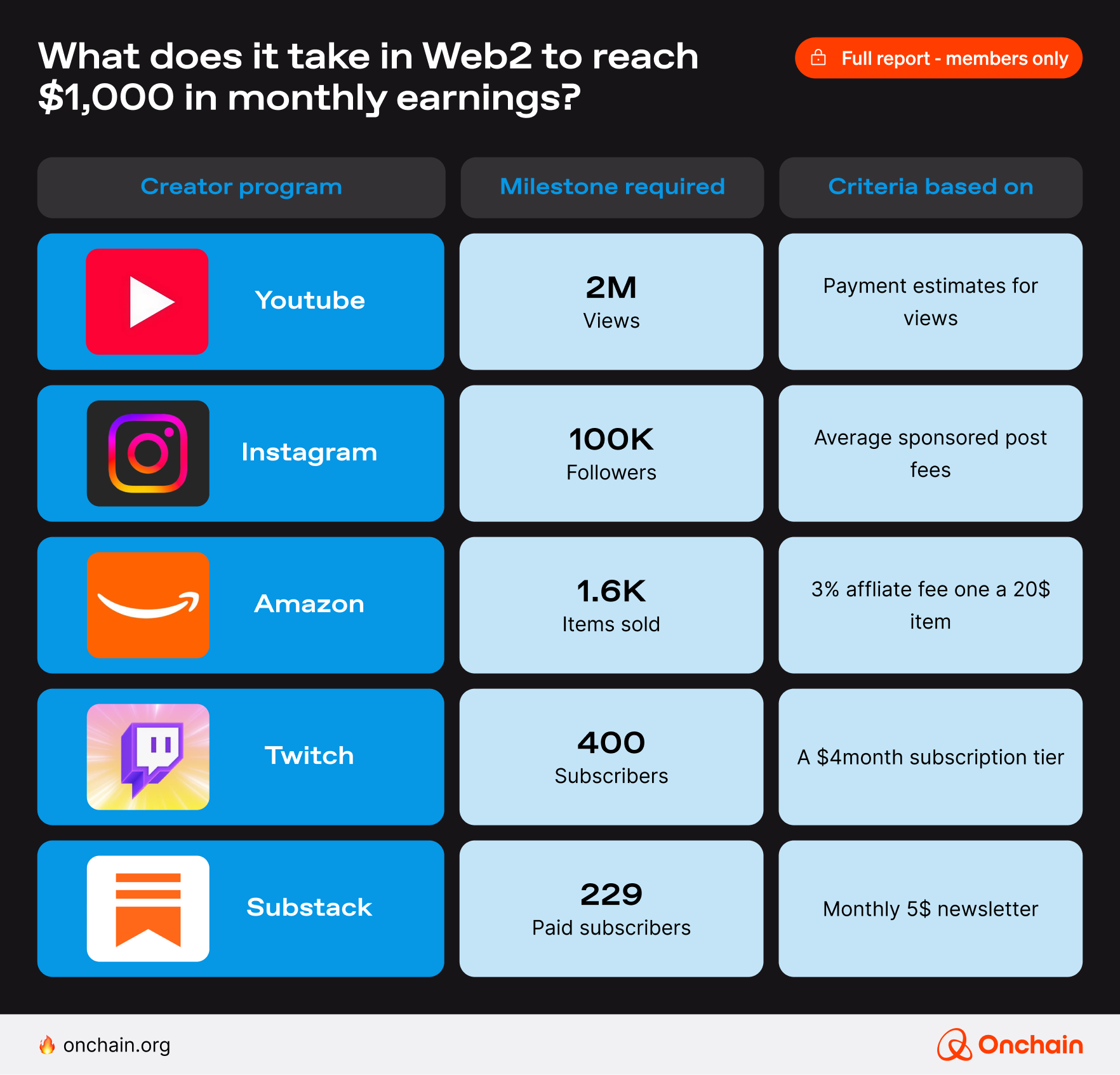
Even successful creators earn primarily off-platform through sponsorships and merchandise, trapped in rent-seeking ecosystems. This dynamic is unsustainable, and it drives the most forward-thinking creators toward Web3-native solutions.
The thesis here is simple yet profound: If creators win, they bring their audiences onchain, initiating a self-reinforcing flywheel effect.
When creators discover genuine value in Web3, they become distribution engines for the entire ecosystem. To test this thesis, we explored Web3 platforms in 2025 to see if generating significant revenue for creators while building sustainable token economies is entirely possible.
As an Onchain member — whether you’re a creator seeking independence, a founder building the infrastructure, or an investor backing the next wave of decentralized media platforms — you’re now best positioned for this discussion.
✨ We have laid the foundation on this topic from our Decentralized Social Network report, featuring insights and founder opportunities from this new creator economy.
Let’s jump right in.
II. The foundational premise: Creators as onchain distribution engines
⏰ TL;DR
The Web3 creator economy gives creators more control. With tools that tokenize content and enable direct community engagement, creators bring followers to Web3 platforms through earned trust and influence. This model revives the “1,000 true fans” vision, allowing creators to thrive through audience alignment rather than sheer audience size.
In Web2, platforms captured most of the value from content engagement. Web3 changes this dynamic: Creators are the distribution. After years of evolution, creators finally take control.
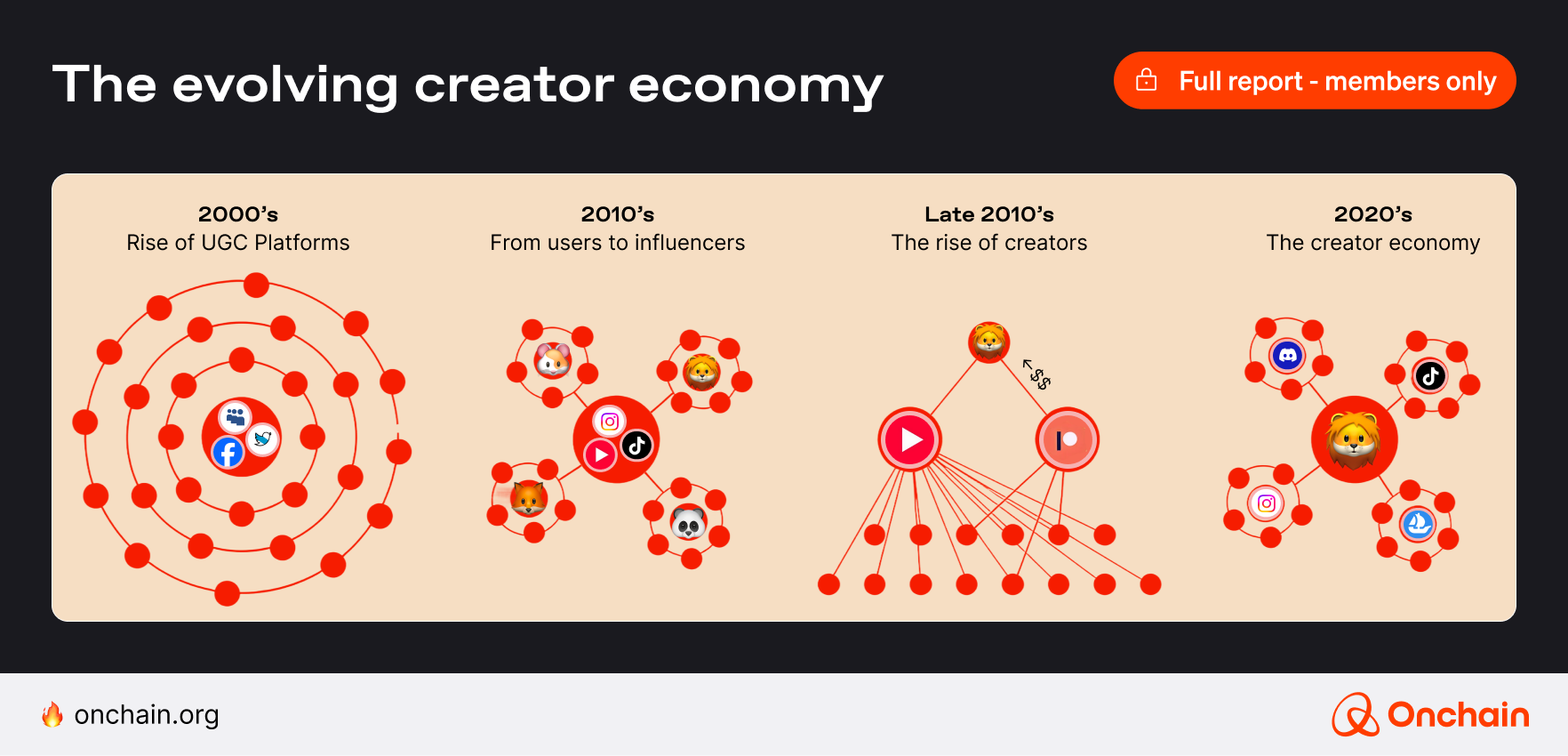

- Follow model — user generated content (UGC) (late 90s and early 2000s): Early creators used blogs, forums, and social platforms to build audiences. User-generated content transformed everyday users into creators who reach global audiences.
- Ad-driven model — from users to influencers (2007-2010s): Platforms like YouTube introduced advertising and shared revenue with creators. But monetization depends entirely on platform policies, and creators own nothing.
- Subscription model — the rise of creators (late 2010s): Tools like Patreon, Substack, and Twitch emerged. Creators can monetize directly through subscriptions, a step toward independence, though still bound to centralized platforms.
- Ownership model — the new creator economy (2020s – present): Lines between fans and creators blur into community ownership. Crypto enables an ownership economy where creators become the distribution engine.
The creator paradox. Creators face a painful contradiction: They must build massive audiences to monetize, but large audiences force them to compromise the authentic content that attracted fans in the first place.
In 2008, Wired founding editor Kevin Kelly offered a solution in his essay “1,000 True Fans.” He predicted the internet would transform creative economics and allow creators to thrive with small, deeply committed supporter bases.

“To be a successful creator you don’t need millions. You don’t need millions of dollars or millions of customers, millions of clients or millions of fans. To make a living as a craftsperson, photographer, musician, designer, author, animator, app maker, entrepreneur, or inventor you need only thousands of true fans.”
- Kevin Kelly, excerpt from essay “1,000 True Fans”
For some time, Kelly’s vision was overshadowed by Web2, where creators and fans became dependent on centralized platforms to connect. The good news: with Web3 the internet is shifting back toward its original ideas and values.
Creator-led onboarding: Igniting the Web3 flywheel
The most effective path to mass Web3 adoption doesn’t pass through direct marketing campaigns to millions of consumers. Instead, creators progress from platform users into active distribution engines for the entire Web3 ecosystem.
The Web3 playbook relies on creator-led onboarding. Each time a musician launches an NFT collection, a writer publishes onchain, or a gamer builds a token-gated community, they conduct a micro-onboarding event for Web3. The trust and rapport creators built with their audiences in Web2 becomes invaluable social capital that reduces friction for new Web3 adoption.

“Web3 needs to stop optimizing for insiders and start creating for outsiders. That’s how we scale.”
- @HeroOfEther, Hero of Growth at Onchain
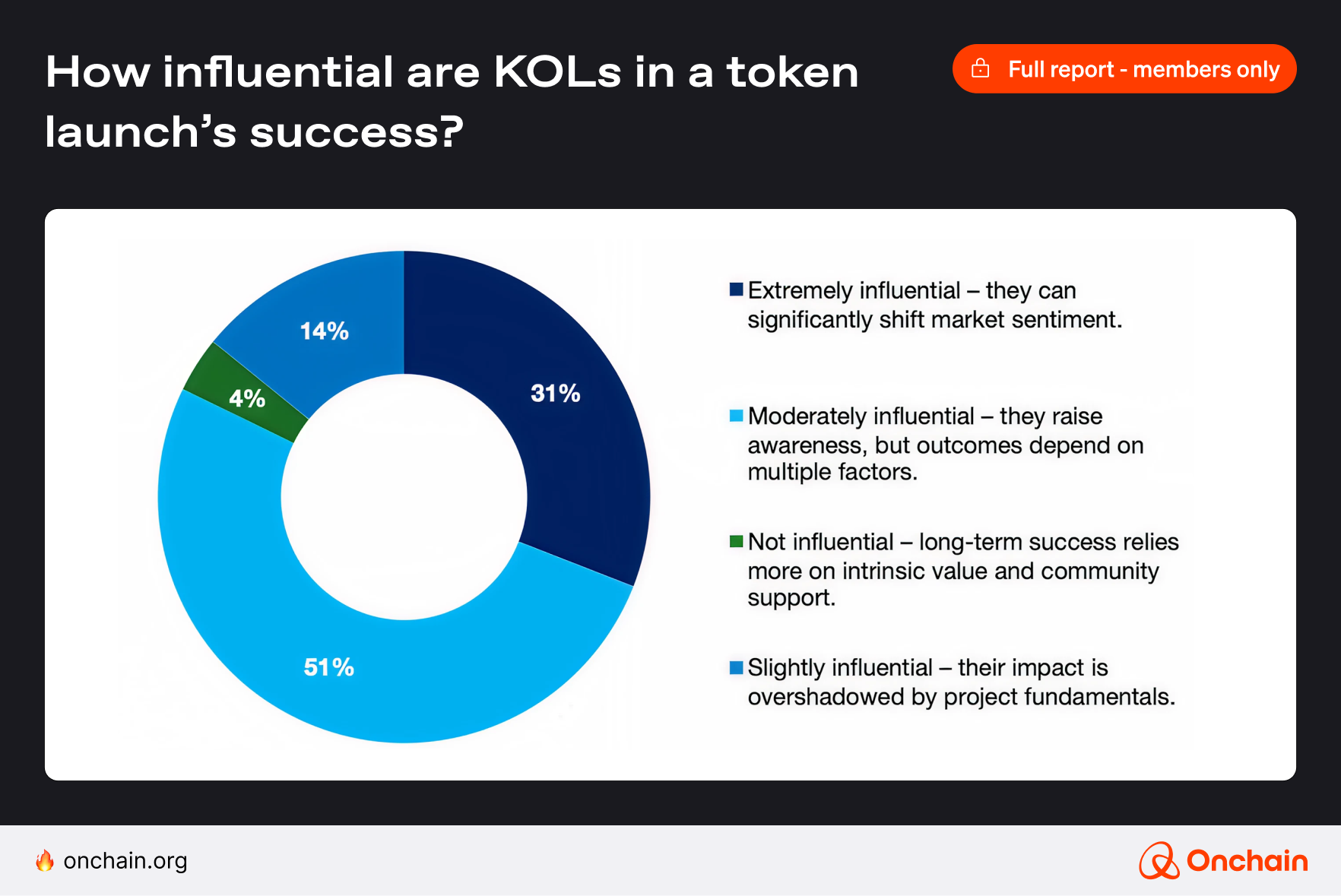
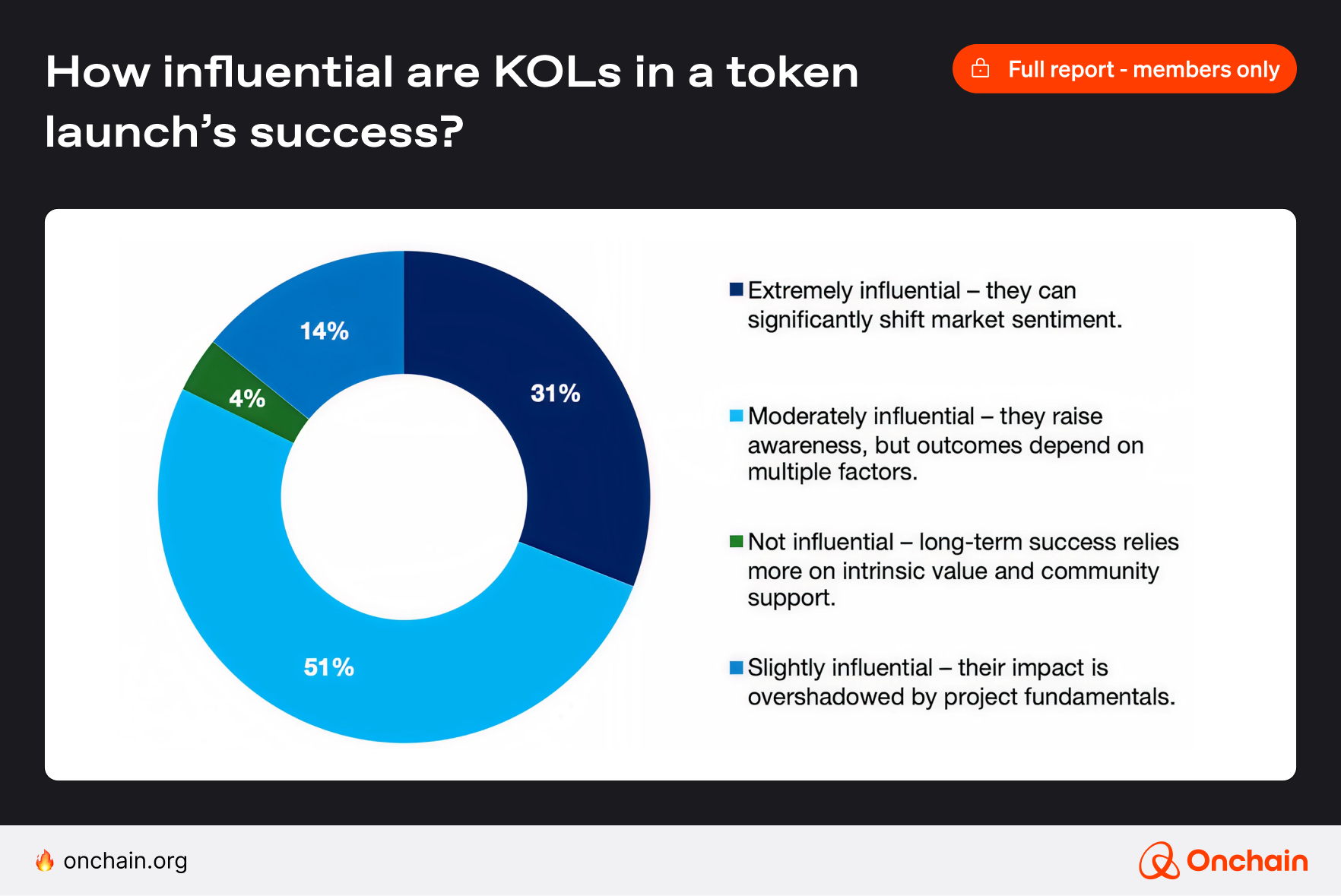
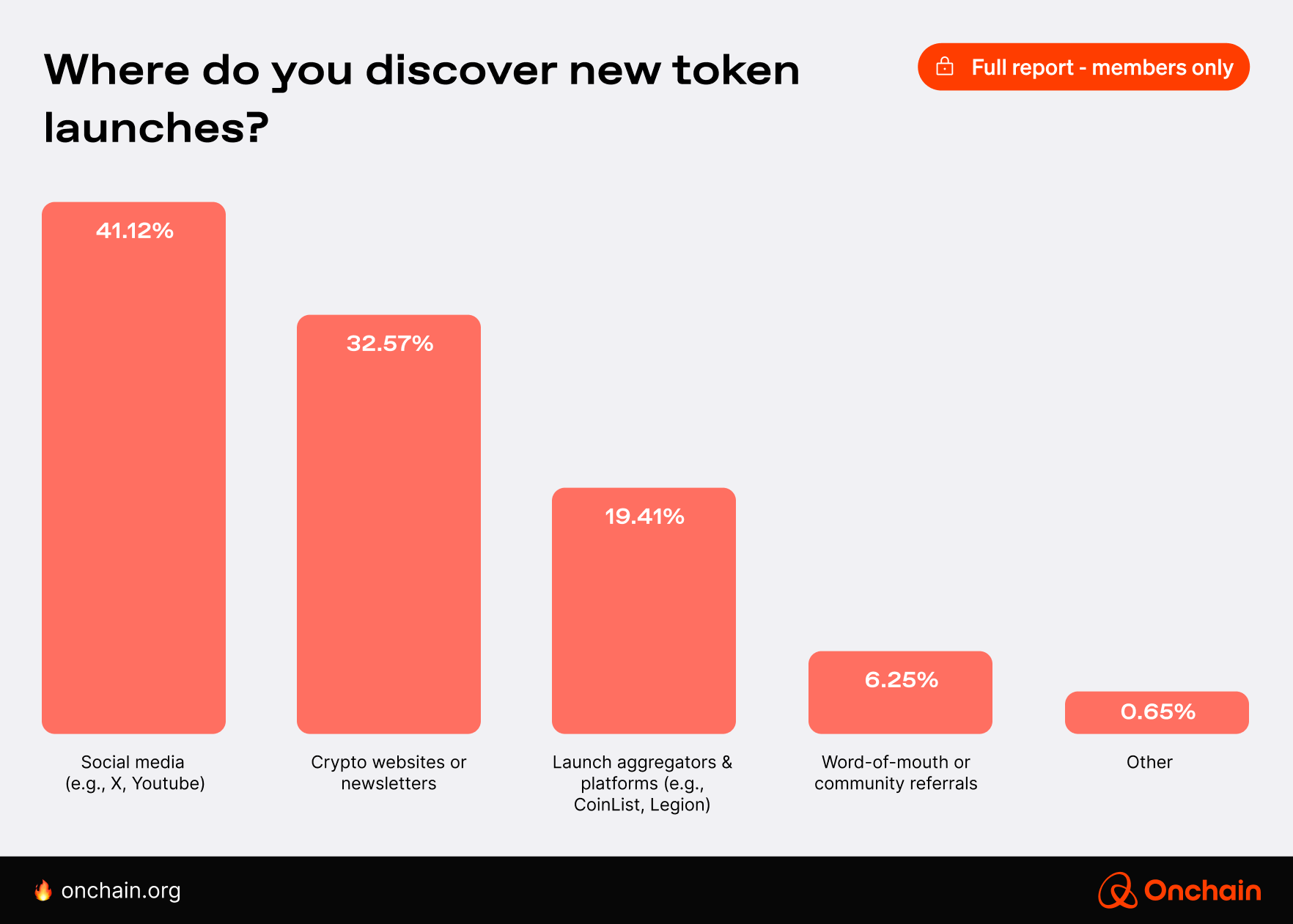
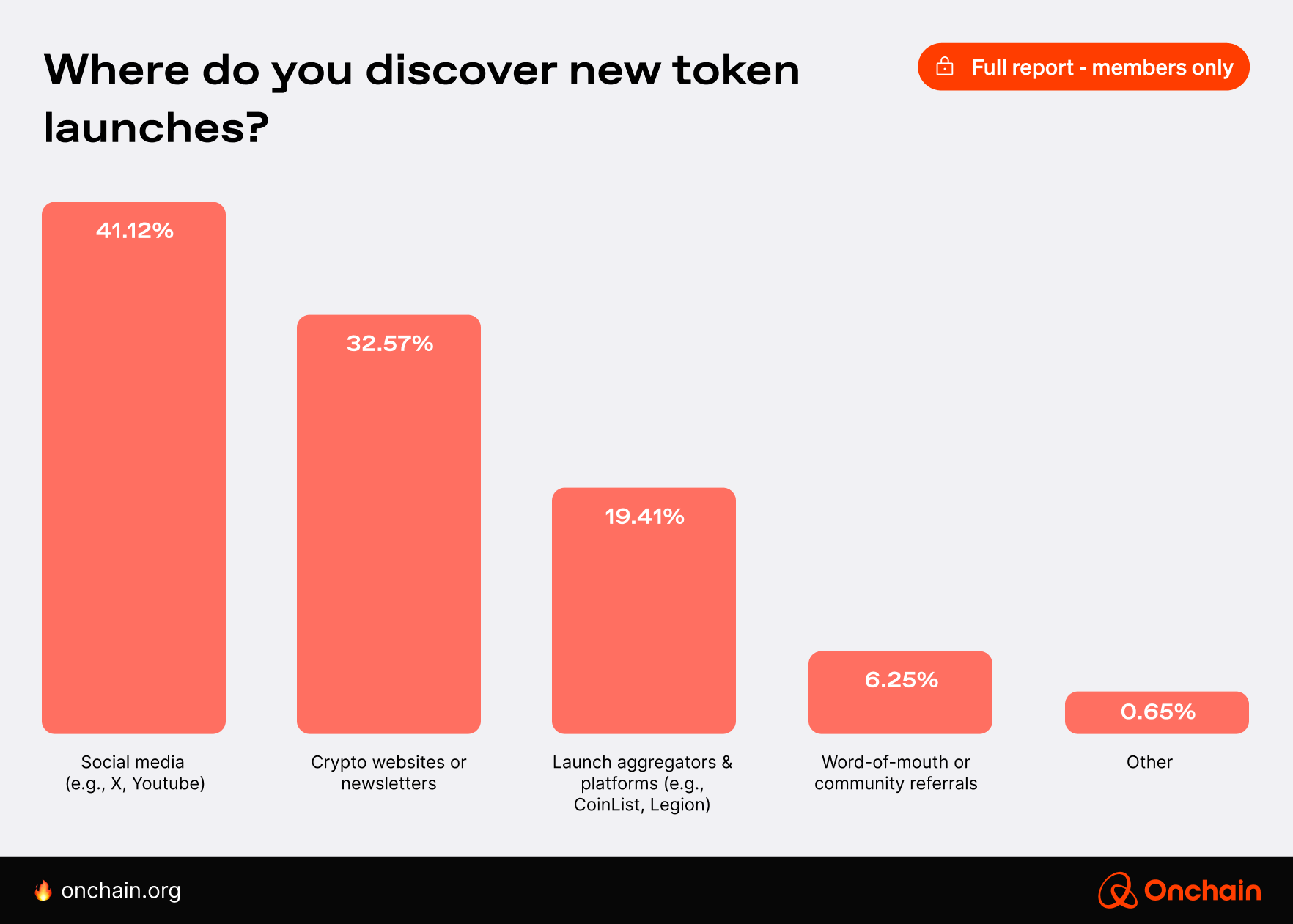
Is there any data supporting this? Content creators and KOLs are considered part of the discovery and decision-making process when it comes to Web3 projects — users validate this. Our research with over 300 participants shows that one-third find key opinion leaders (KOLs) extremely influential in market sentiment.
The majority discover new token launches and projects through social media.
A 2023 study by crypto marketing agency VestPi analyzed 500+ KOL campaigns across major crypto projects and found that KOL-led distribution delivers:
✅ Higher engagement: Micro-KOLs (10K-100K followers) achieve nearly triple the engagement rate of top-tier KOLs (1M+ followers) — 5.7% versus 2.1%.
✅ Increased brand awareness: 30% focus on content monetization, which proves most effective for brand awareness growth.
✅ Optimized for virality: KOLs integrated into project strategies can yield up to 4.1x viral coefficient when combined with timed campaigns.
Creators enable project teams to tap into strong network effects and deeply engaged audiences. As a founder or builder, you can use this insight to your advantage.
What’s next for creators? So far, we’ve established three key points:
- A new creator economy is emerging.
- Creators serve as entry points for Web3 platforms.
- They play a vital role in networks and protocol growth.
The critical question is: What’s in it for creators? Or more precisely, how can we ensure their success so they bring their audiences onchain?
Our answer: Build sustainable economies that reward both creators and their communities, align incentives, and create feedback loops where each action strengthens the next. Let’s explore how Web3 platforms are making this possible.
III. The core dynamic: The Web3 Creator Flywheel in motion
⏰ TL;DR
The Web3 creator flywheel compounds network effects through three pillars: ownership, monetization, and engagement. Platforms like Orb, Zora, Kaito, PODS, Noice, and Farcaster show how these pillars turn creative expression into thriving ecosystems. This section provides actionable strategies and resources for founders and creators ready to build sustainable Web3 communities.
The anatomy of the flywheel
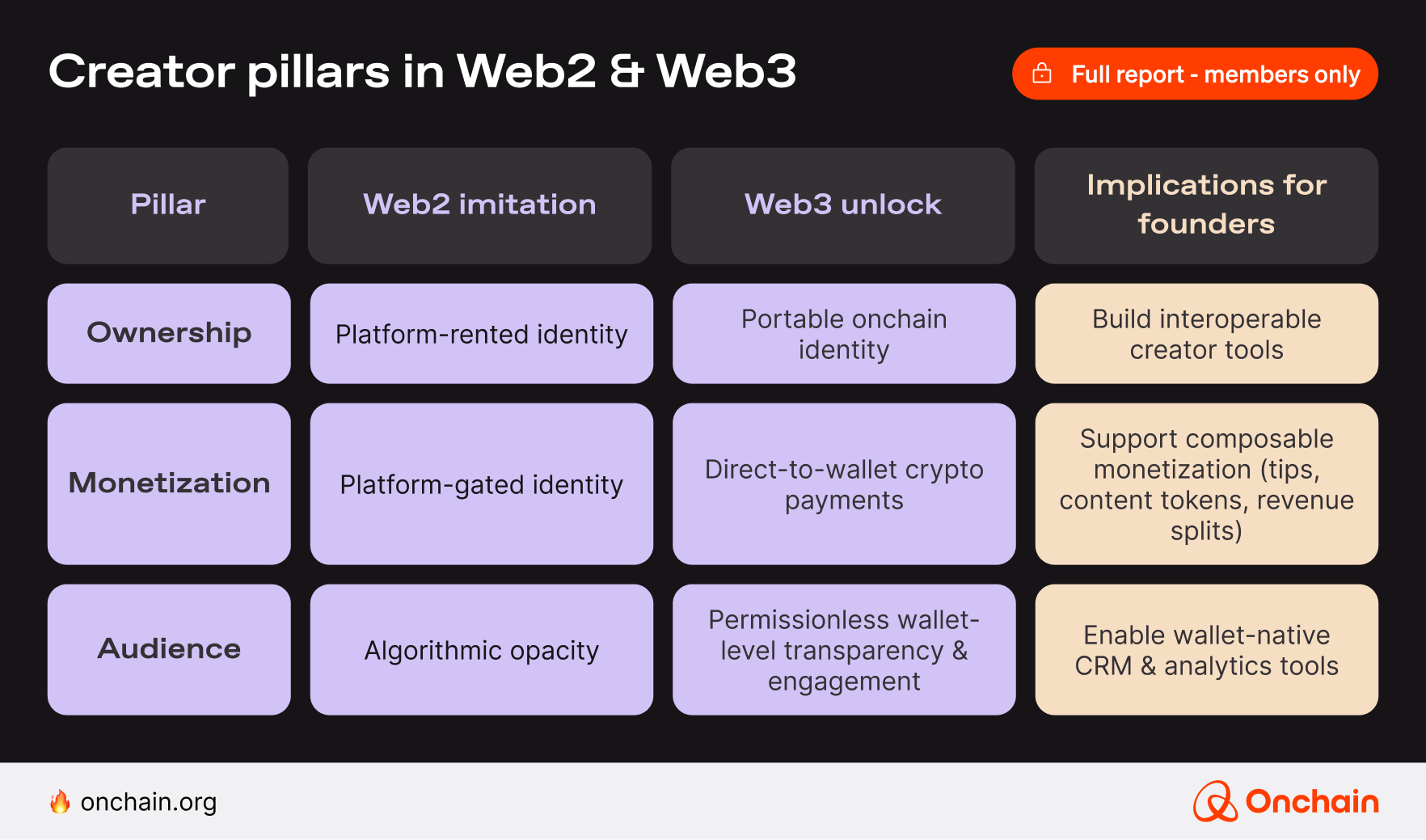
This report breaks down the Web3 creator framework into three pillars: ownership, monetization, and audience engagement. Together, they enable creators to build lasting value, maintain control, and achieve sustainable growth.
1️⃣ Onchain ownership ensures creators have direct control over their content and its economic upside;
2️⃣ Monetization turns that ownership into sustainable income without intermediaries;
3️⃣ Audience engagement transforms passive fans into active participants and stakeholders, deepening loyalty and driving growth.
Winning in Web3 means designing these pillars to work in sync, where each reinforces the others. The stronger the connection, the faster the flywheel spins.

Pillar 1: True ownership, redefined
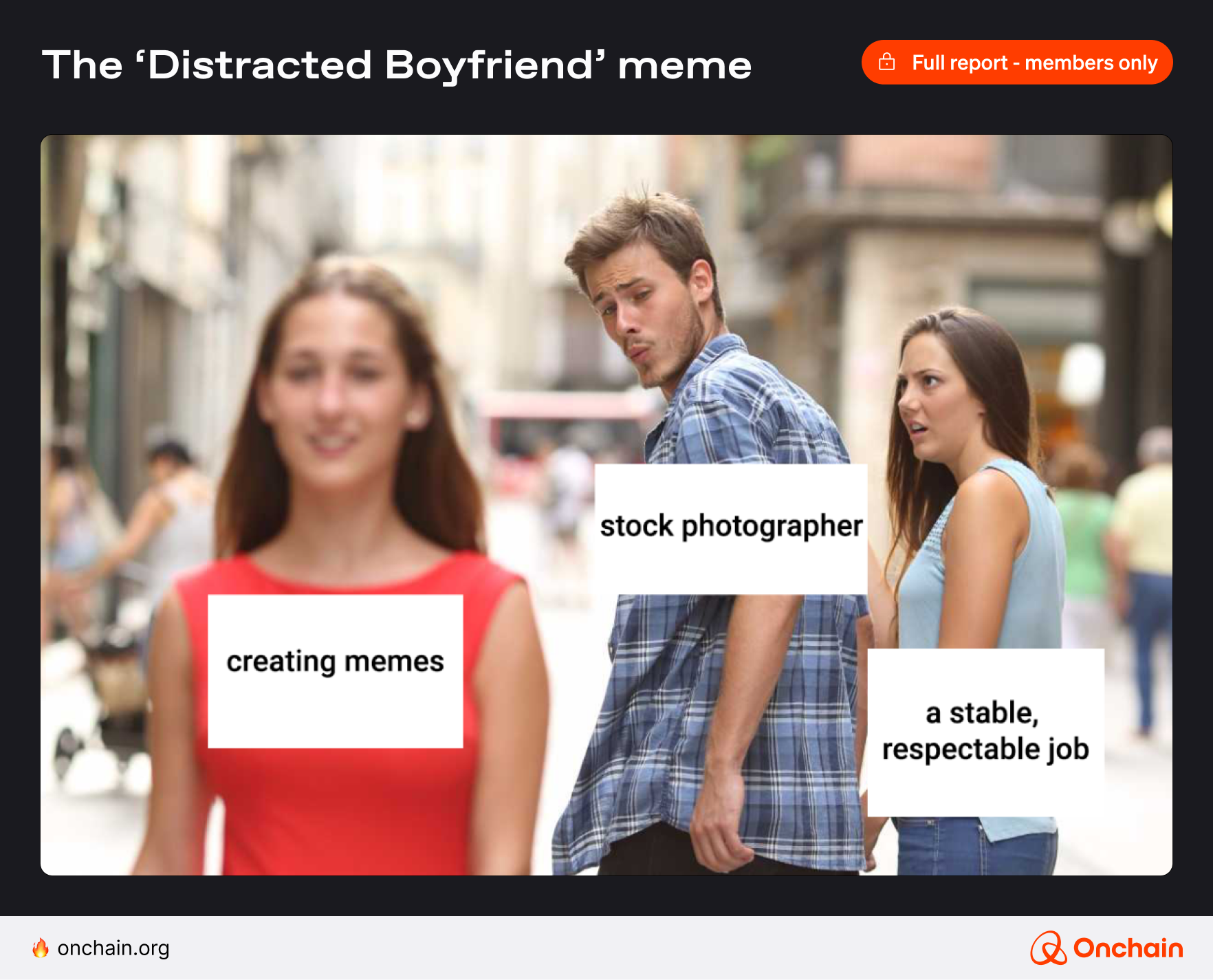
Creators lease their audience and content from platforms in Web2. This is by design.
Their digital assets, social graphs, and online identities are often owned, controlled, and monetized by centralized entities. We have seen cautious tales in Web2 around this.

Web3 aims to provide a better way. It enables true ownership of content, IP rights, audience relationships, and even a stake in the platforms themselves.
But what does that actually look like? Here’s how Web3-native social networks deliver real ownership to creators.
Orb Club x Story Protocol: Turning reactions into royalties
Orb Club, a social app built on Lens Protocol, has emerged as a top Web3 platform alongside Hey and Phaver in 2024. Now part of Mask Network, Orb is relaunching with deeper integrations into the Web3 social stack.
So what sets Orb apart? It replaces likes with creator stickers, custom NFT reactions that double as economic assets. Anyone can design a sticker pack: Starting at $1 USDC, each mint increases in price, with built-in revenue sharing that rewards creators, holders, and referrers.
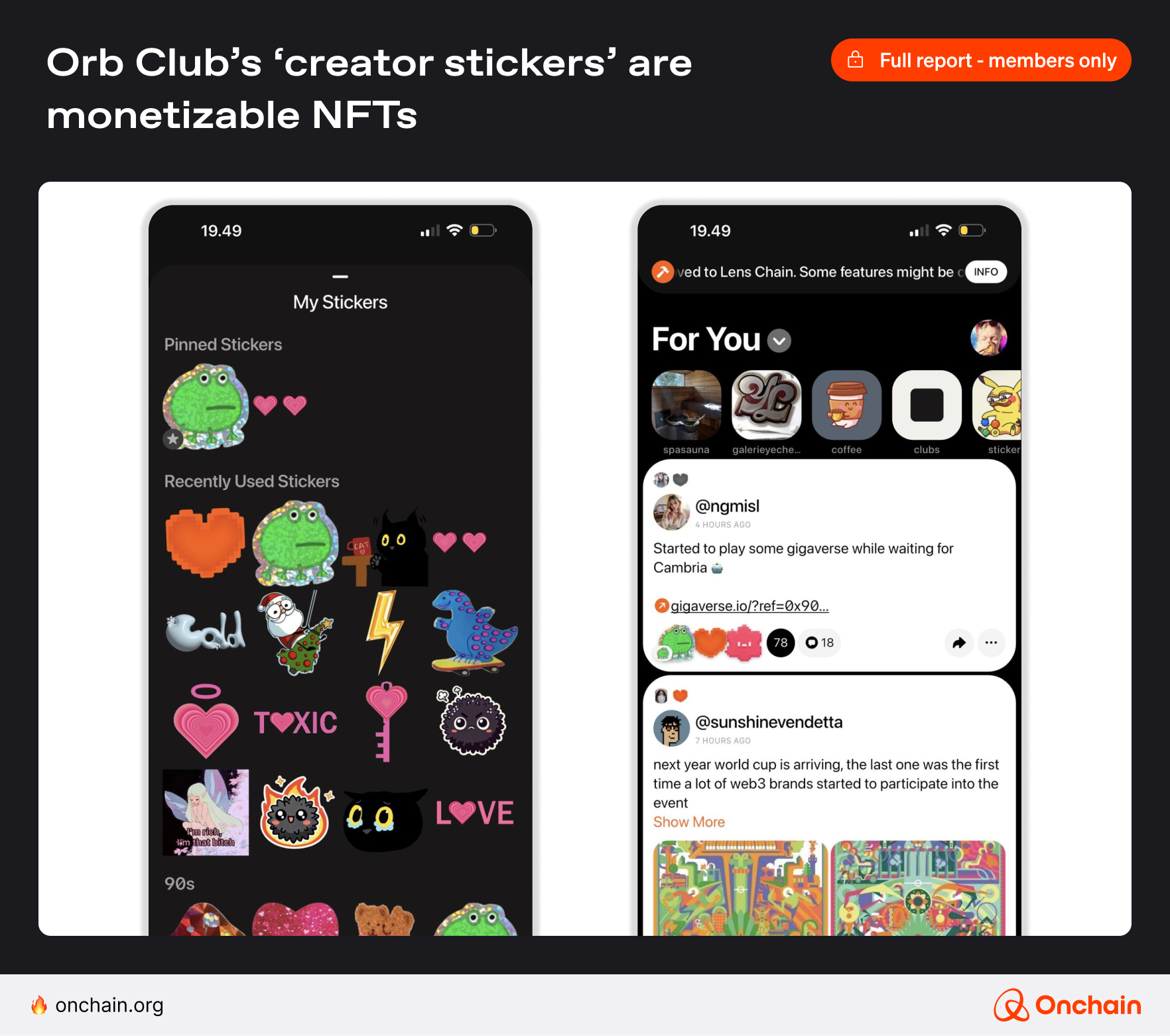
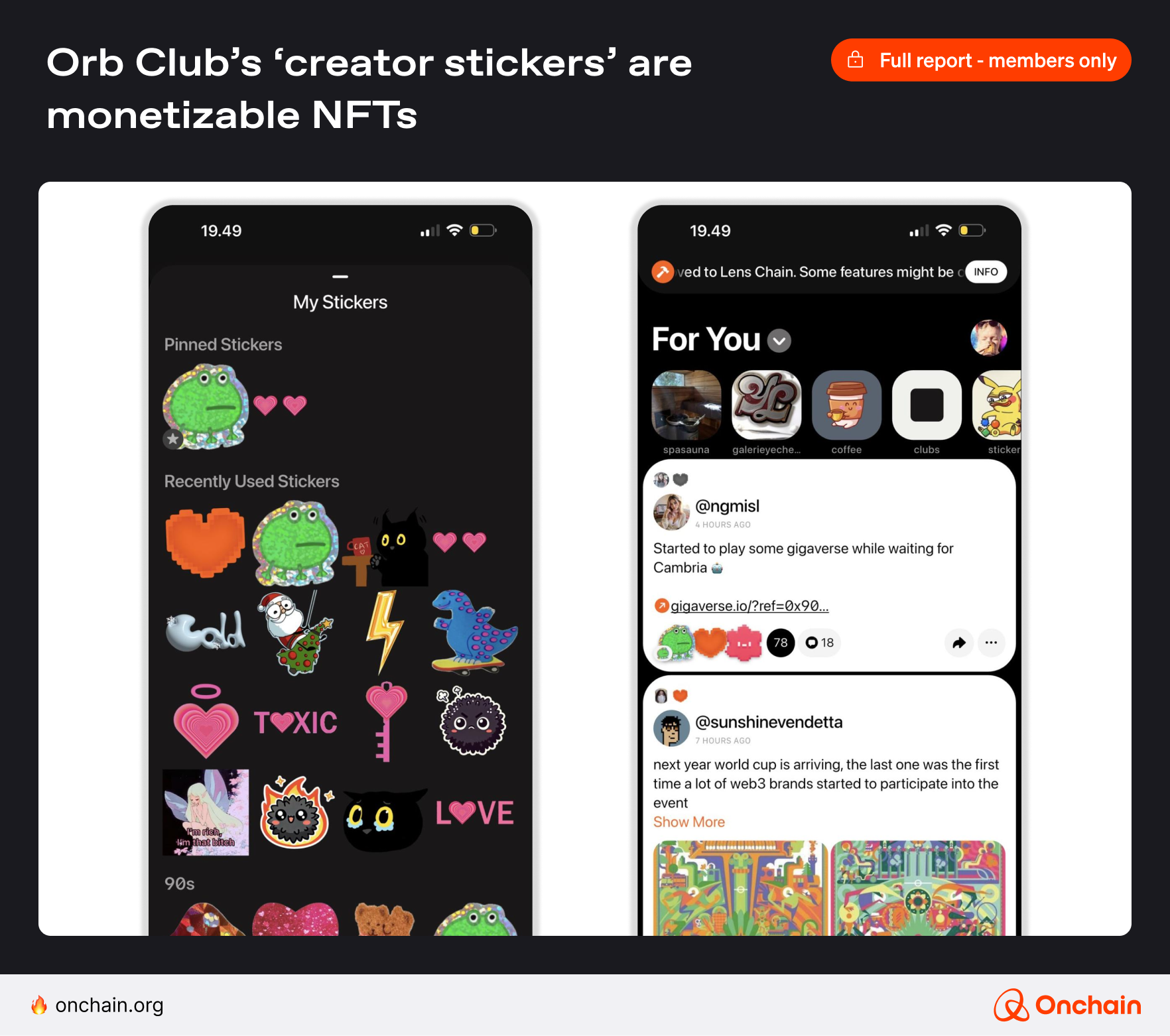
The IP layer comes from Story Protocol, which encodes licensing rights directly into each NFT. That means:
🎨 Creators retain rights and earn royalties on reuse
🤝 Users become co-owners, not just fans
Custom reaction stickers aren’t new (remember LINE?), but Orb takes a different approach. For creators, here’s how revenue is split as of October 2024:
- Creators earn 40% of sales.
- Sticker holders share 40% of the royalties.
- Club treasuries receive 8% (split between creators and holders if no club exists).
- Referrers earn a 4% referral bonus (goes to creator if no referrer).
- Orb platform fee: Orb keeps an 8% fee to sustain the platform.
The virality factor. Orb’s model rewards creators and holders most when sticker packs go viral. Since royalties depend on ongoing use and sharing, activity drives earnings. For most holders, returns stay minimal unless a pack truly takes off.
Still, Orb’s standout feature is experiential. Community feedback highlights Orb’s playful, expressive interface as a welcome return to a more personal internet.
Orb combines strong adoption, positive community response, and deep Web3 integration — the foundation for a potentially successful social platform. The key question remains whether this economic model can sustain creator communities long-term and drive continuous growth.
🎬 Creator tip
Orb relaunched its sticker shop in June 2025. Create your own collection to earn revenue. Or, buy promising stickers before they go viral to benefit from any price appreciation.
- Low floor, high upside: Many early sticker packs still trade below $5, offering asymmetric upside if they go viral.
- Club treasuries act like mini DAOs. Some of them experiment with curation strategies, token holder airdrops, or treasury staking rewards.
💡 Key recommendation for founders
Orb shows the power of tokenized fandoms and micro-IP economies, with its Story Protocol integration providing solid legal and IP support. Combining free expression with financial ownership creates sticky user engagement.
Zora: A protocol for universal media ownership
Zora is more than an NFT marketplace, but a protocol for universal content ownership. Built on its own OP Stack-based L2 (Zora Network), it enables creators to mint NFTs or “creator coins” for under $0.50, making tokenization accessible at scale.
The experience feels like early Tumblr, but with a Web3 twist: every post is instantly purchaseable. Creators can set prices, track buyers, and even trade their own tokens. This seamless setup removes friction and invites bold creative experimentation, without the burden of gas fees.

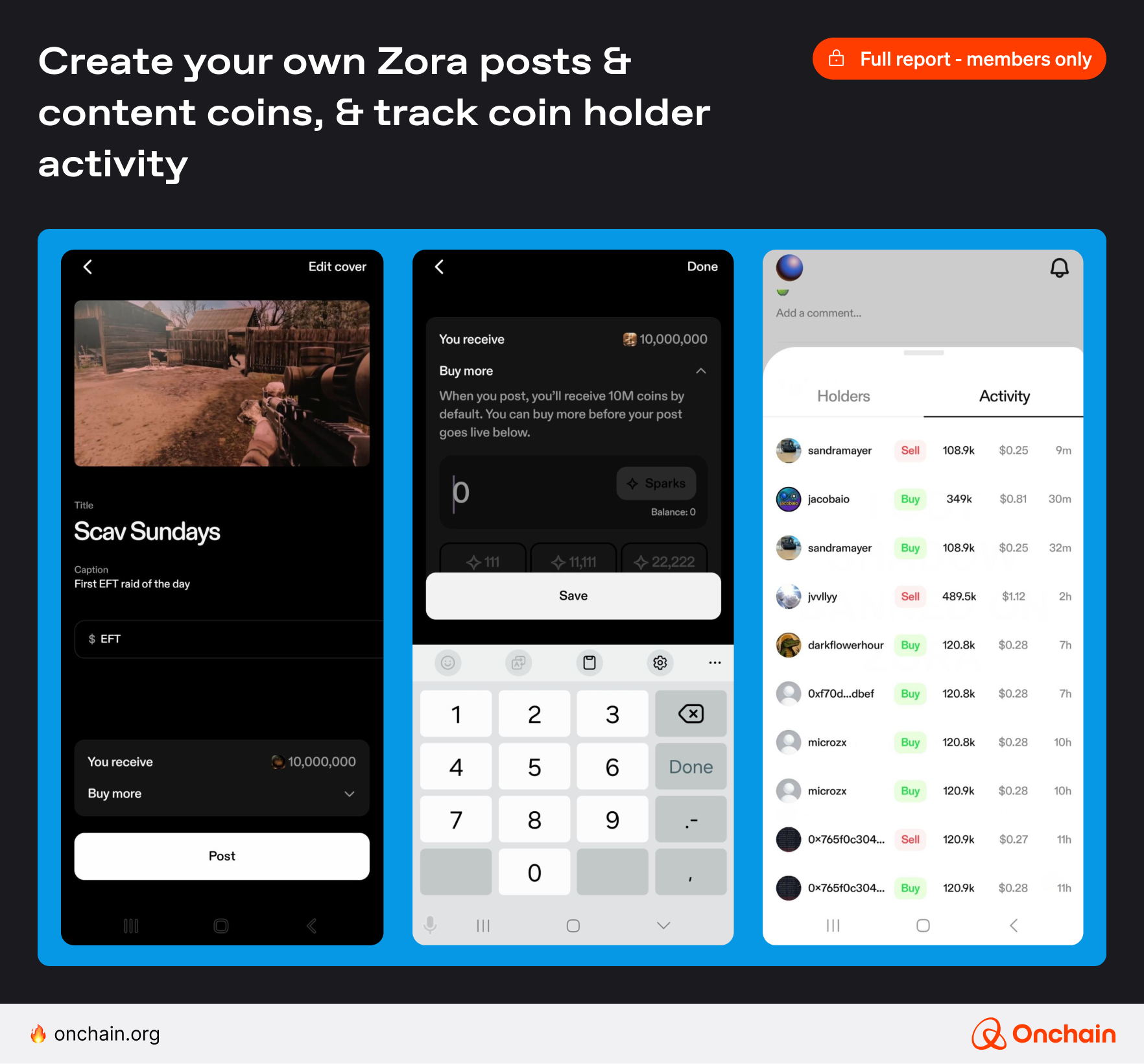
On Zora, ownership becomes interactive and every post is a stake in culture. With creator coins, users are curating, buying, and speculating on content value.
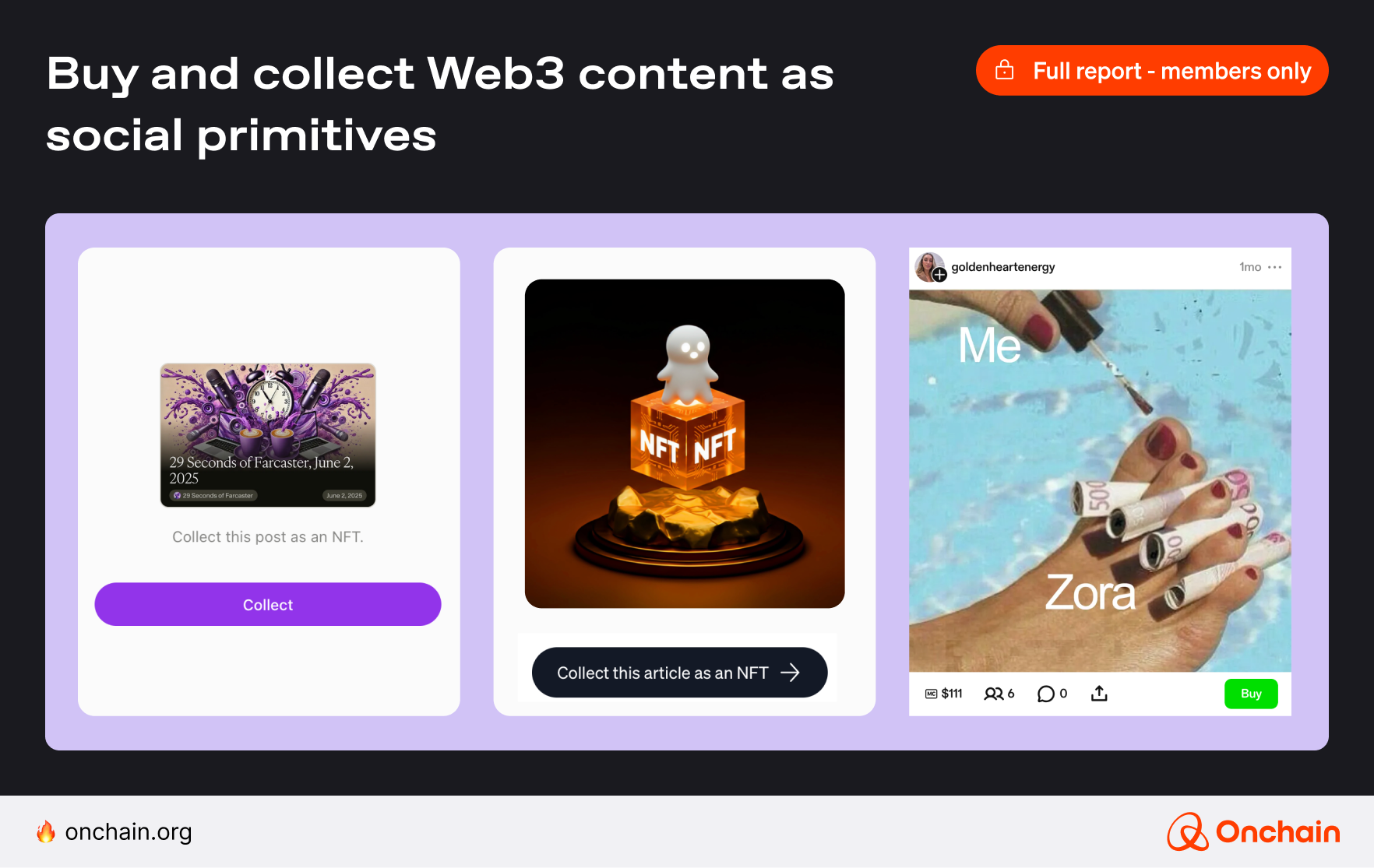
Buying or collecting content as NFTs is a powerful new primitive for media, slowly becoming the norm as you can see within platforms like Paragraph, Rodeo, and even Onchain.

Critical hits and misses. Zora’s May 2025 token launch stumbled out of the gate, plagued by poor communication, unclear utility, content coin gone wrong, and a tokenomics model that reserved just 10% for users via airdrop.
What went wrong:
- Low float, high FDV trap: Token unlocks triggered heavy selling, tanking momentum.
- No clear purpose: The token was branded as “for fun”, with no clear governance or real-world utility.
- VC skepticism: Zora followed the now-familiar pattern associated with VC tokens: a quick pump followed by a sharp decline as insiders capitalized on the early hype.
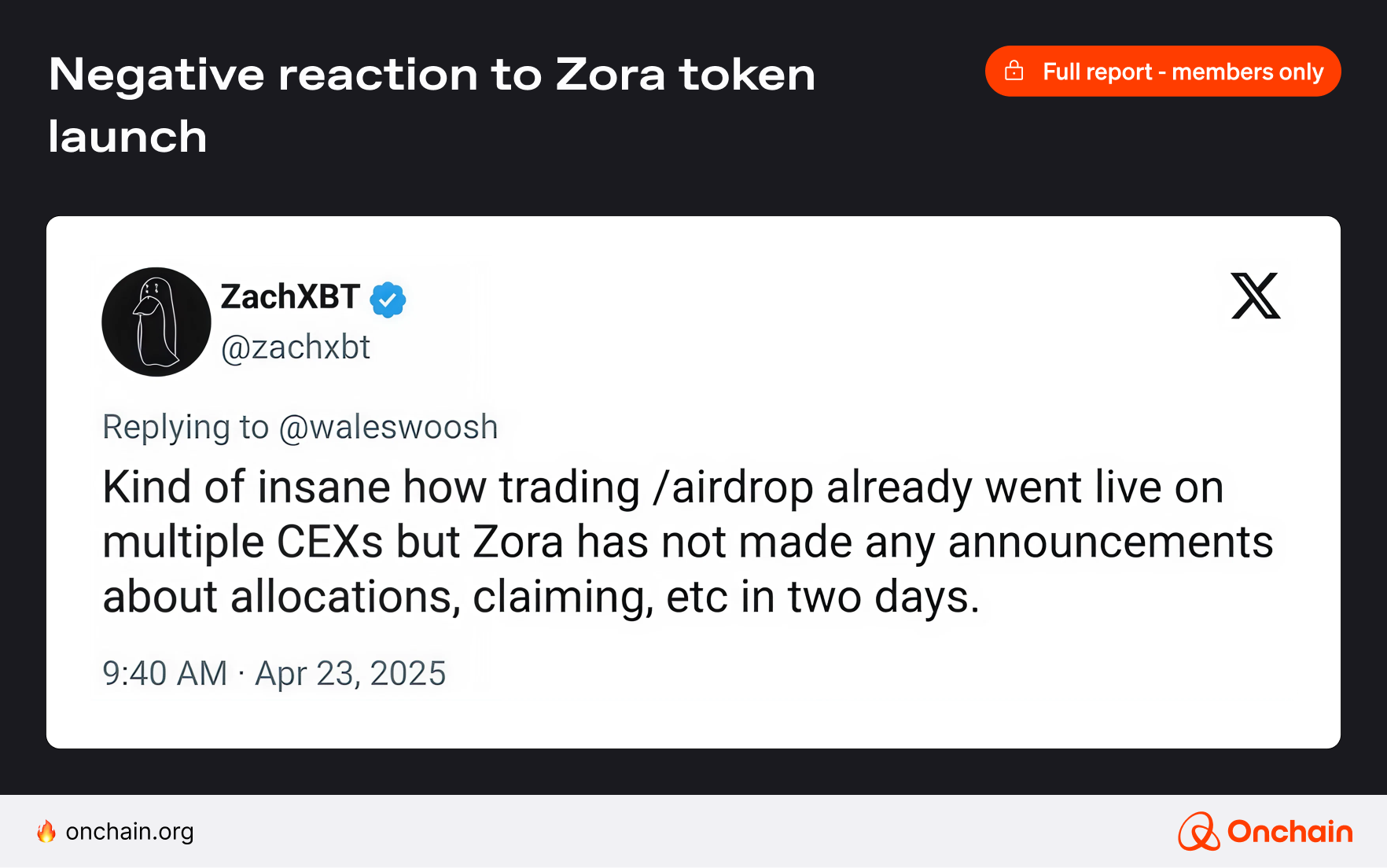

The backlash was immediate. Engagement fell 98%, active users dropped 90%, and the token has yet to recover from its April peak.
Despite the rocky rollout, Zora pulled in $4.46M in a single day this May, ranking third in crypto revenue behind platforms like Meteora and Jito. Other recovery signals include:
- $370M+ in secondary trading volume in 2024, and $27.7M paid to creators from 2M+ collectors
- Record growth in new coins and unique creators in April 2025
- Entry into the top 100 US apps on the Apple App Store
Zora’s journey holds valuable lessons for founders and project teams, but its recent traction proves there’s still strong demand for creator coin infrastructure. With the right execution, it can be well-positioned to compete in the next cycle.
🎬 Creator tip
Content coins could become Web3 media memecoins. Get early exposure by minting culturally relevant posts. Look at Base and Zora integrations for breakout traction. Take advantage of creator program rewards.
💡 Key recommendation for founders
Zora’s model isn’t perfect, but it provides useful insights: Ownership becomes viral when it’s personal, playful, and nearly (or completely) free.
- Infrastructure and community trust come first; the token comes second. Zora’s token launch failed because it prioritized hype over utility.
- Own your minting stack. Minting should feel like posting on Instagram: Use L2s or appchains to reduce costs and increase throughput.
- Build with a pre-integrated liquidity structure (e.g., Uniswap V3).
This ownership pathway raises a key question: Is media and cultural ownership enough to draw creators and their audiences onchain?
While ownership is compelling, virality ultimately wins. Web3 ideals don’t guarantee adoption, but emotion, interaction, and fun do. That’s why audience engagement is just as critical.
Pillar 2: Attention is all you need
While ownership empowers creators to control their content and its economics (Gear 1), and monetization turns that into real income (Gear 3), Gear 2 focuses on what makes both of those systems work: attention.
Web2 platforms capture most engagement value through views, likes, and comments. With over 2 million creators competing for visibility, it’s increasingly difficult to get traction.
As engagement becomes tokenized social capital in Web3, followers act as signal amplifiers. This shift marks the transition from SocialFi to InfoFi, where influence is no longer a byproduct. Instead, it’s measured, monetized, and owned.
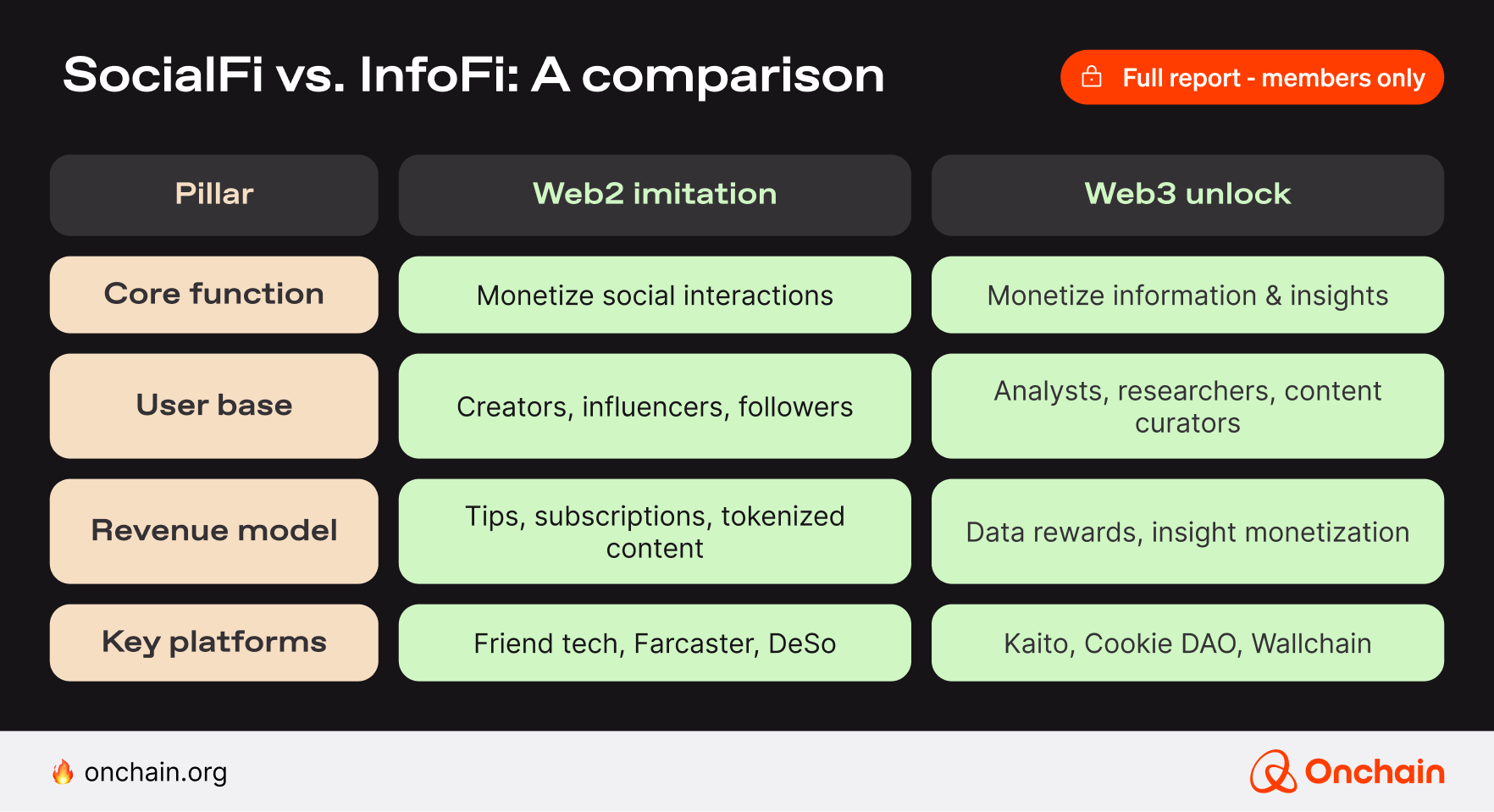

Thanks to tokenized attention, creators can now earn on their content’s impact, not just the content itself. Today, even a high-signal tweet is monetizable. As the affordances of tech evolve, the definition of a creator expands beyond traditional creatives to include curators, onchain sleuths, market analysts, and researchers.
As content moves onchain, new value measurement systems emerge to match decentralized creation dynamics.
🧠 Mindshare: Tracks influence and attention across Web3 communities (see Kaito AI, Noise.xyz)
📈 Social graph: Builds on a rich social graph and leveraging existing connections to overcome the Cold Start problem
🏆 Leaderboards: Makes creator-fan dynamics transparent and monetizable (see Loudio leaderboard)
👀 Smart followers: Identifies which VCs, KOLs, or founders engage with your content (see Kaito’s smart follower dashboard)
📊 Analytical tools and dashboards: Tools that offer deep insights into remix behavior, collector patterns, and wallet-level engagement (see Protokols.io)
Kaito AI: The rise of attention economy in the creator space
Leading the InfoFi narrative, Kaito AI reimagines engagement by tokenizing attention itself. Through “Yaps,” it rewards both creators and followers for high-quality contributions, turning every meaningful tweet, reply, or share into a form of Proof-of-Influence that lives onchain.
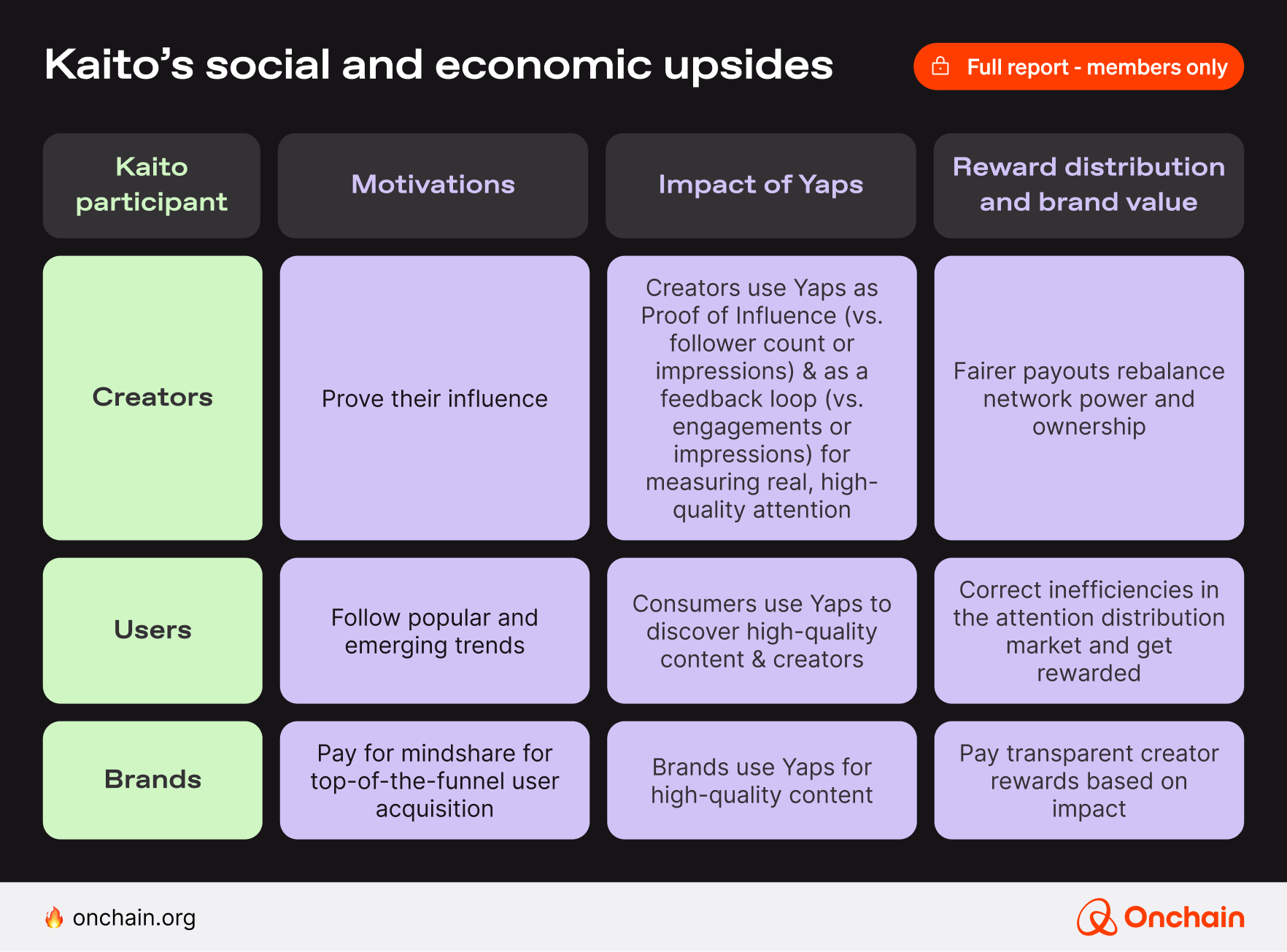
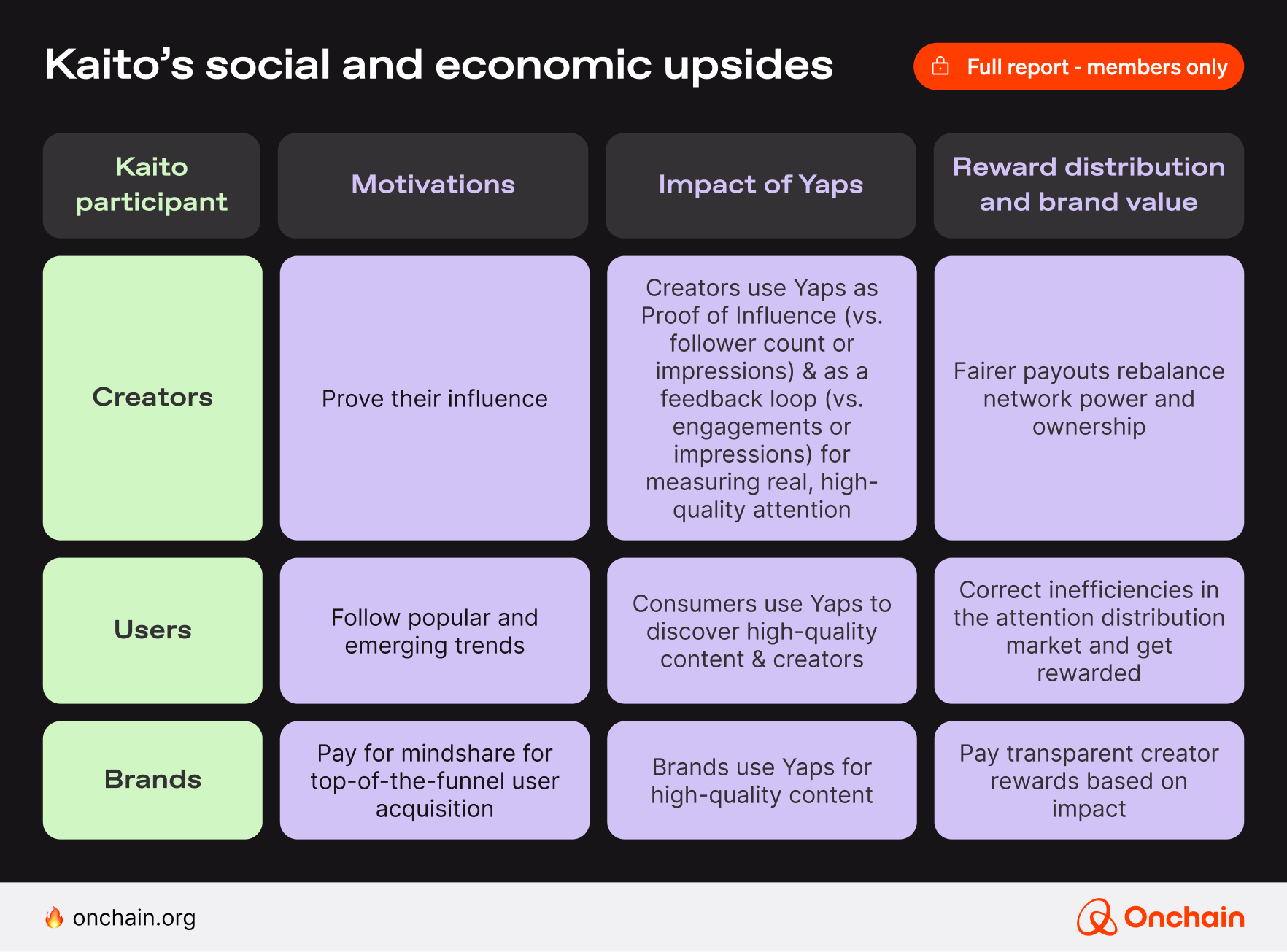
Kaito shows impressive metrics: 200K+ monthly active users and nearly $33M in network fees. However, the Yap model faces significant issues that founders/projects need to consider:
⚠️ Algorithmic opacity: Users can’t fully understand how rewards are distributed
⚠️ Influencer bias: Top creators dominate while newcomers struggle for visibility
⚠️ Broken incentives: Inactive accounts sometimes earn more than active contributors
⚠️ Limited reach: A “circle effect” restricts emerging creator discovery
While Kaito pioneered the space, newer entrants like Ethos aim to refine the model with credibility scoring systems that better distinguish genuine influence from engagement farming.
“There are numerous things we can do with that (credibility score) data once it exists, but until now all of this has been very hackable and easy to spoof. It costs $0.04 to get a thousand likes on your tweet, and Kaito is really good at ignoring the noise there. We’re trying to instrument another way to measure that noise and promote the signal.”
- Serpin Taxt, Founder of Ethos Network, “Dominating SocialFi With Ethos”
📽️ Head over to our Onchain Youtube channel for insights on everything Web3. Hit “Subscribe” while you’re at it.
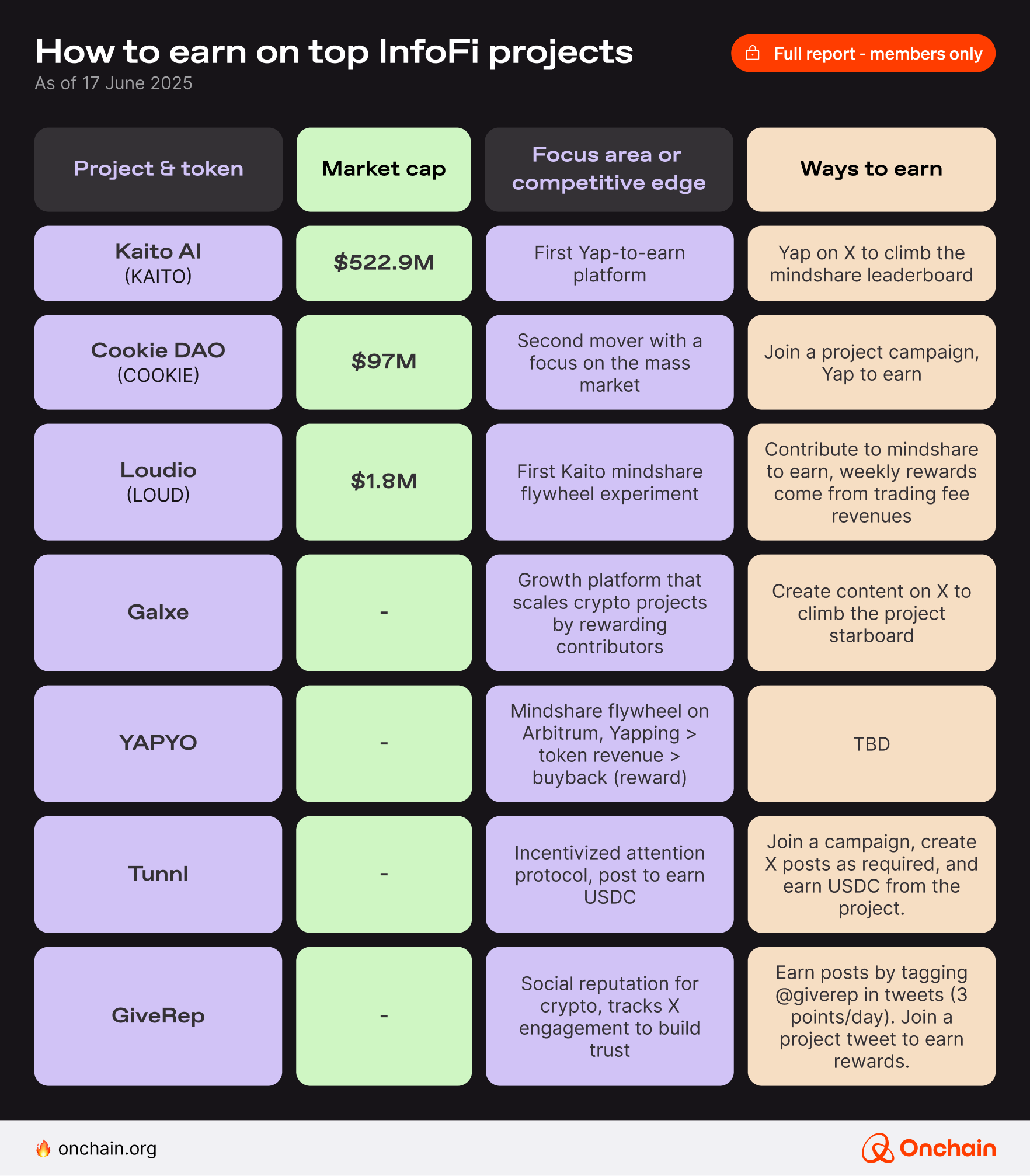
Yes, InfoFi and SocialFi categories are still developing. Founders can explore emerging projects like Loudio (experimental mindshare rewards model), Cookie DAO (mass-market Yap-to-earn), and YAPYO (attention buybacks), as they prove this is becoming a replicable onchain primitive. For these types of projects, long-term success likely hinges on moving beyond attention metrics toward deeper, trust-based systems that truly serve creator communities.
🎬 Creator tip
Below, see the non-comprehensive list of emerging InfoFi projects you can earn revenue on.

💡 Key recommendation for founders
Tokenized influence and engagement are now core Web3 primitives. Prioritize systems that reward signal quality over quantity: Yaps, mindshare leaderboards, and smart follower dashboards. Use token rewards to reinforce high-quality contribution loops that don’t rely on ads or centralized discovery.
Here’s the reality: Without monetization, virality is just noise. Creators ultimately need ways to turn attention into sustainable income. Next, you’ll find out how Web3 employs new monetization models for capturing value from every moment of engagement.
Pillar 3: Direct and multi-path monetization
Web2 platforms make it nearly impossible for creators to earn real income. Between low payouts and middlemen taking a cut, the system is stacked against them. That’s why more creators are turning to Web3 where tokenized rewards, direct monetization, and deeper fan engagement come built-in from day one.
Let’s see how this works in action.
Pods.media: Collect conversations, get direct rewards
Available on desktop and as a Farcaster mini-app, Pods.media lets users discover, collect, and support podcasts directly from their feed.
Creators can mint full episodes or clips as NFTs, and listeners can collect them, effectively becoming patrons. Here, creators earn 100% of sales, with Pods only taking a fee from collectors per edition.
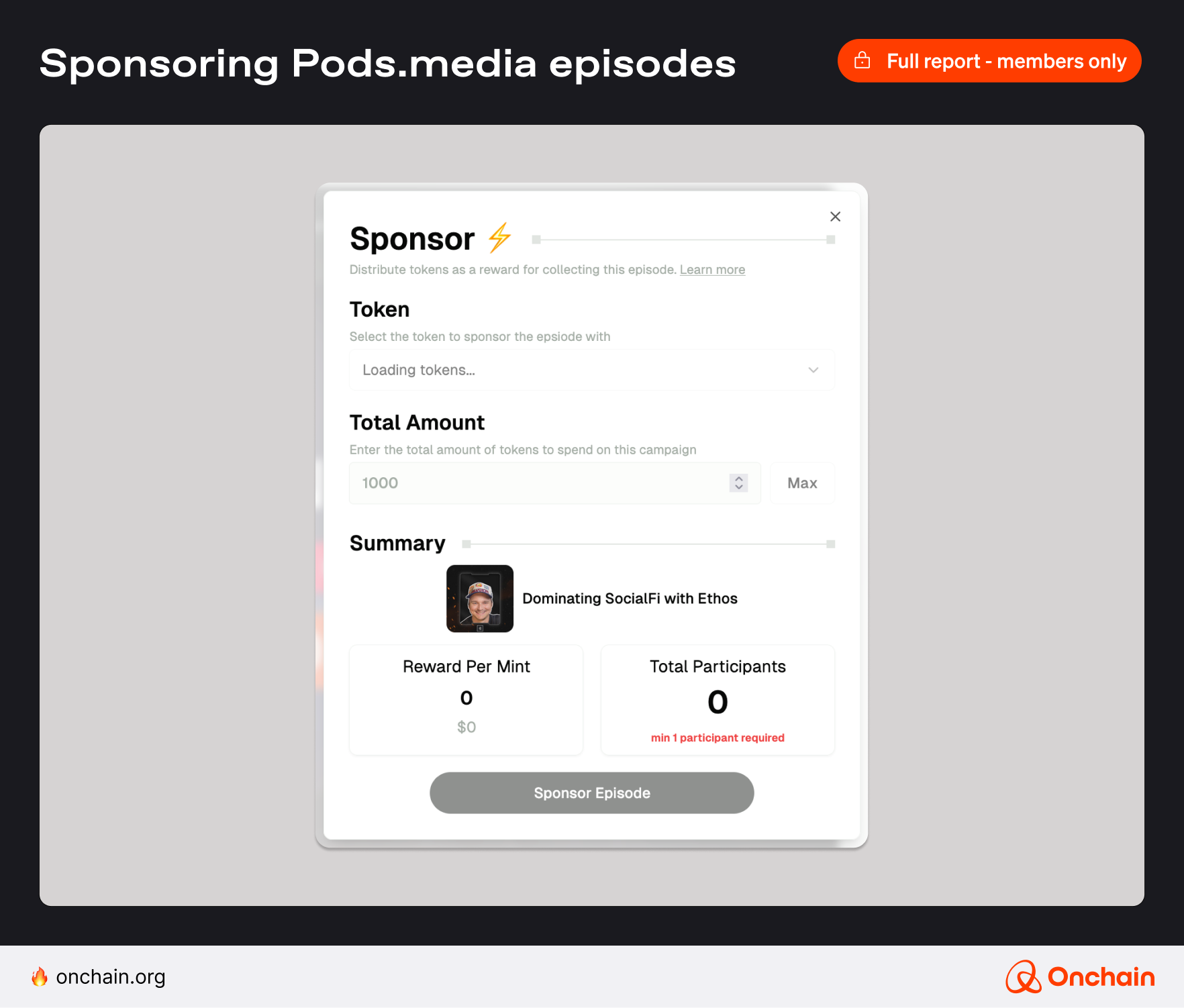
One of Pods’ key features is sponsorship of posts. Anyone can add token rewards to an episode, encouraging more mints and engagement. Here’s how that looks in practice:
💫 For creators/projects: Drive episode distribution, grow token holders, and boost mint volume.
💗 For collectors: Support your favorite podcasts and earn a reward in return.

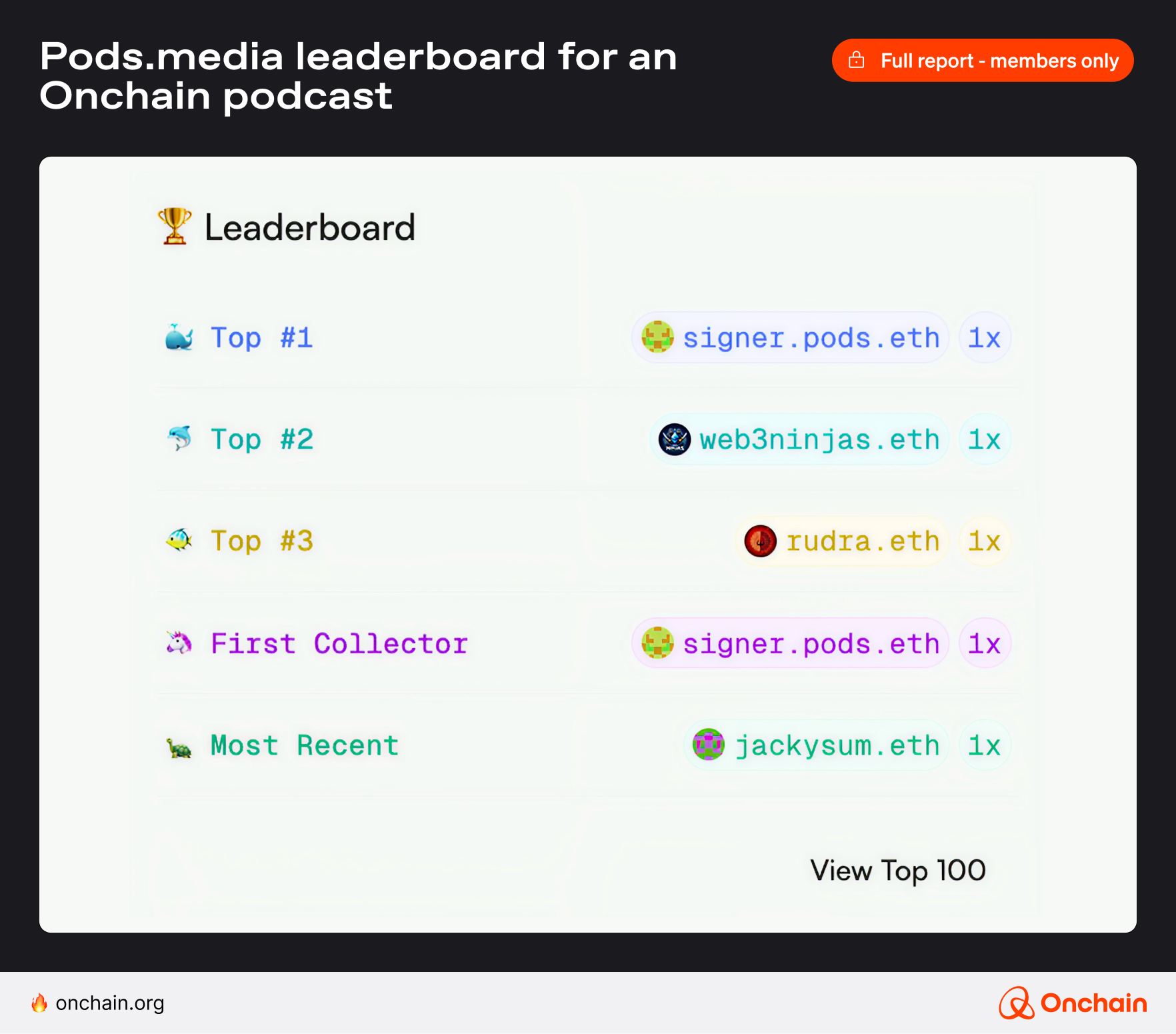
Using in-app leaderboards, creators can track engagement and reward loyal listeners directly via airdrops or token drops if they want to.
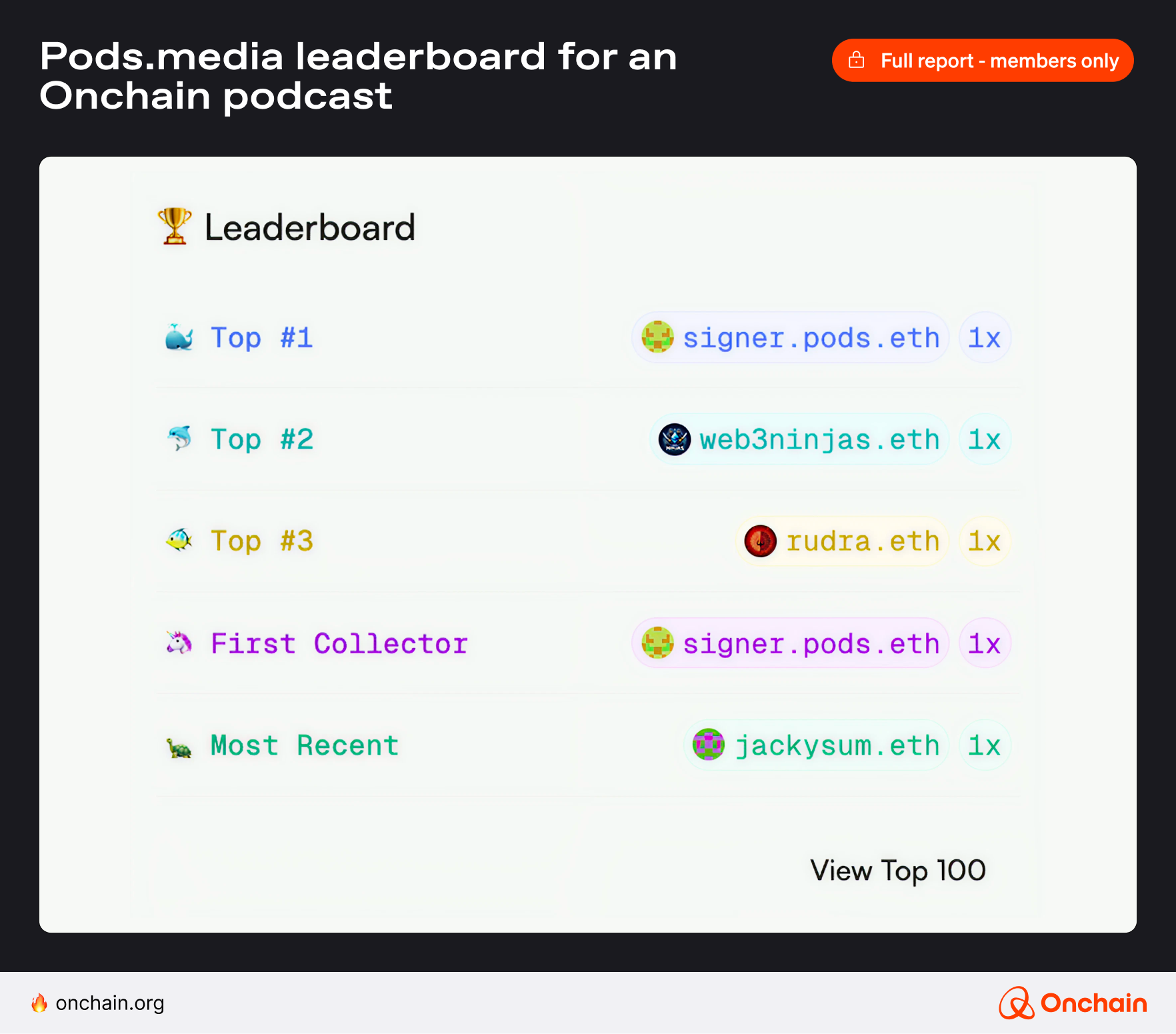
Pods has been gaining traction among creators. By June 2025, the platform recorded over 1M mints from 144,000 users, all within two years of launch. One of its top channels, Mint Podcast, has generated more than 250,000 mints from nearly 70,000 collectors and earned around $651K in sales since joining in April last year.
This onchain-native marketing model is catching on. Platforms like Coop Records are adopting similar strategies, using incentivized minting to promote content and directly reward their audiences.
🎬 Creator tip
Get into Web3 early to build a loyal audience. Pods gives you direct monetization and real-time listener insights.
- Be an early mover in the unsaturated Web3 podcasting market. Pods hosts 153 podcast shows (as of July 2025), far fewer than Spotify’s ~3M active shows.
- Leverage incentivized minting and token-gated access for projects.
- Already active on X Spaces? Repurpose old sessions into monetizable podcasts.
Bonus: Fountain.fm is another podcast monetization platform worth giving a try.
💡 Key recommendation for founders
Pods helps creators iterate faster and grow their communities more effectively. Provide deeper insights and:
- Build creator tools like dashboards and analytics to grow monetization loops.
- Integrate onchain minting and sponsor features to reduce user friction.
Noice: Liquid social interactions via embedded monetization
In 2025, Noice.so emerges as a leading force in SocialFi. Unlike typical platforms, Noice builds monetization directly into Farcaster, making every post (cast) a storefront and every interaction a revenue opportunity.
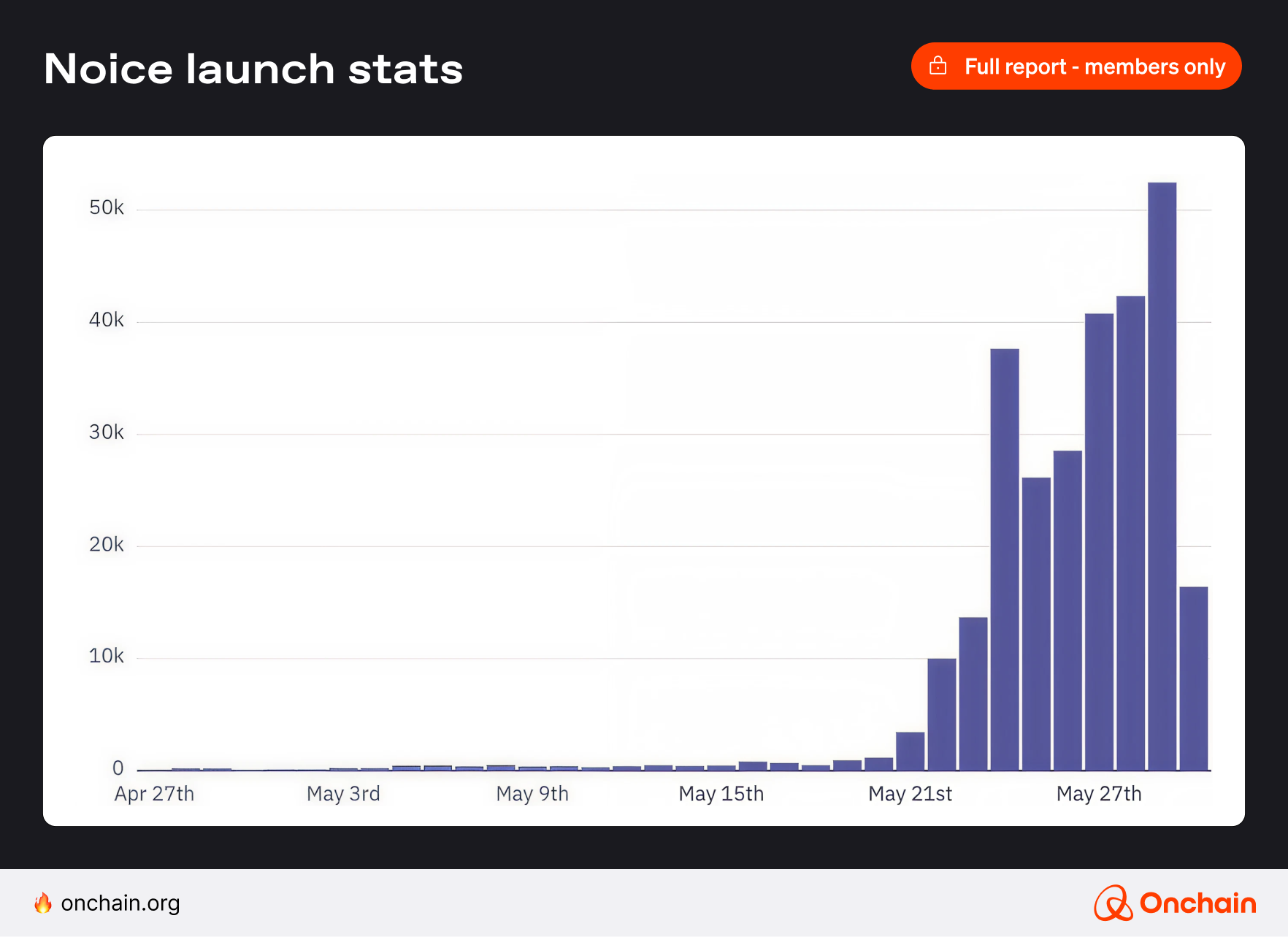
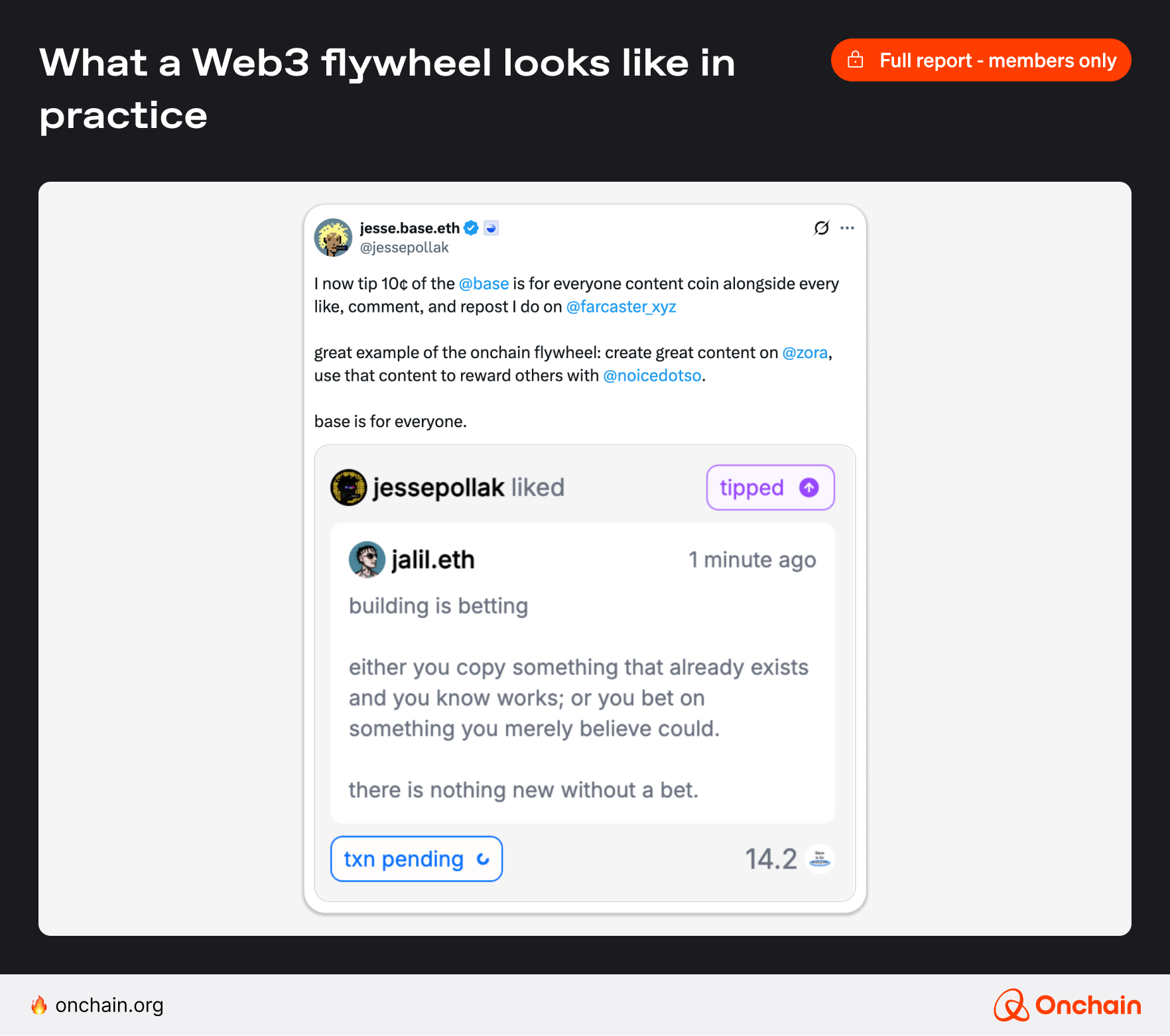
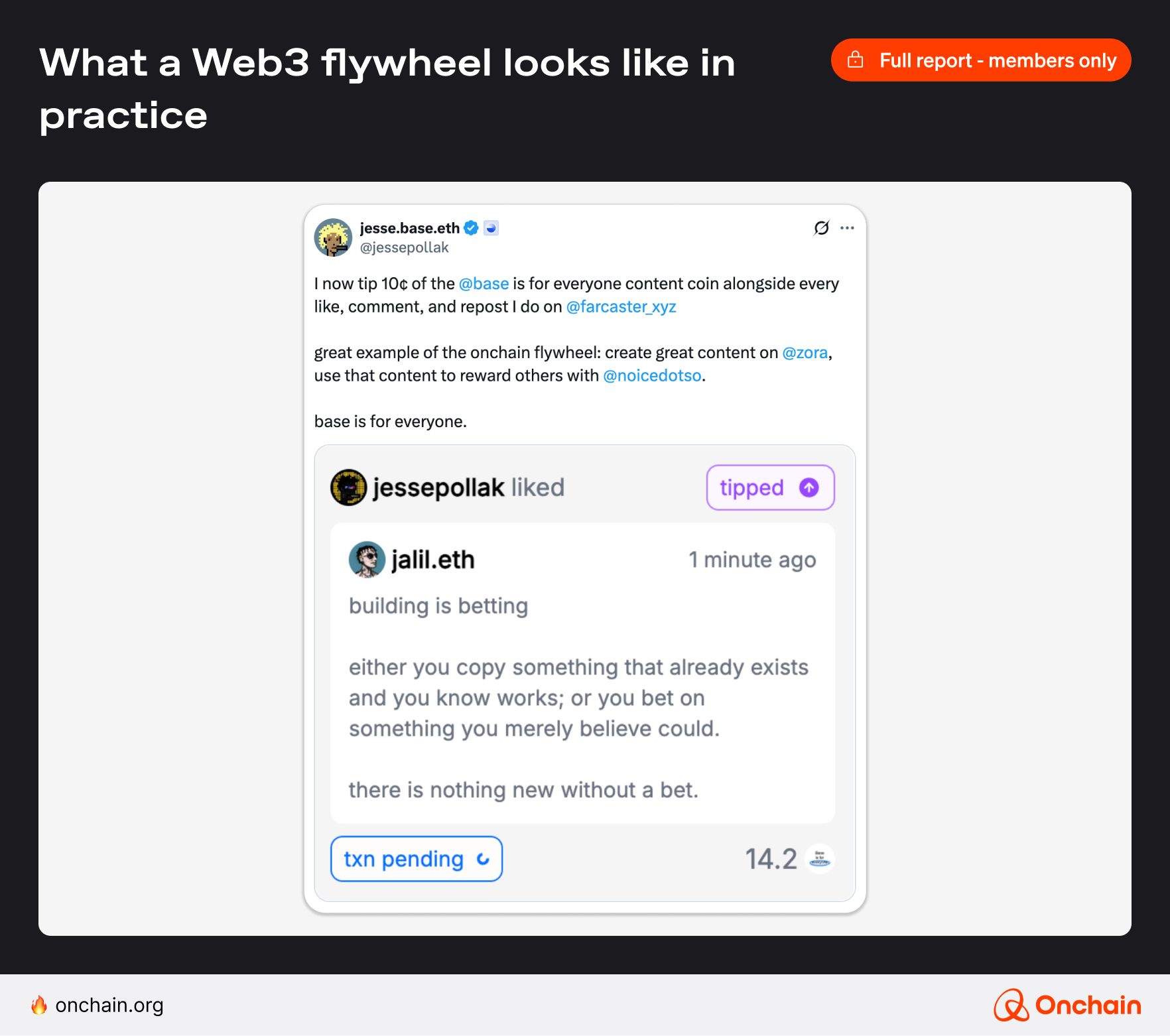
The idea is simple: Pay for casts you like, with real money.
Noice makes Farcaster interactions programmable and monetizable by atomic tipping, enabling real-time tipping in USDC.
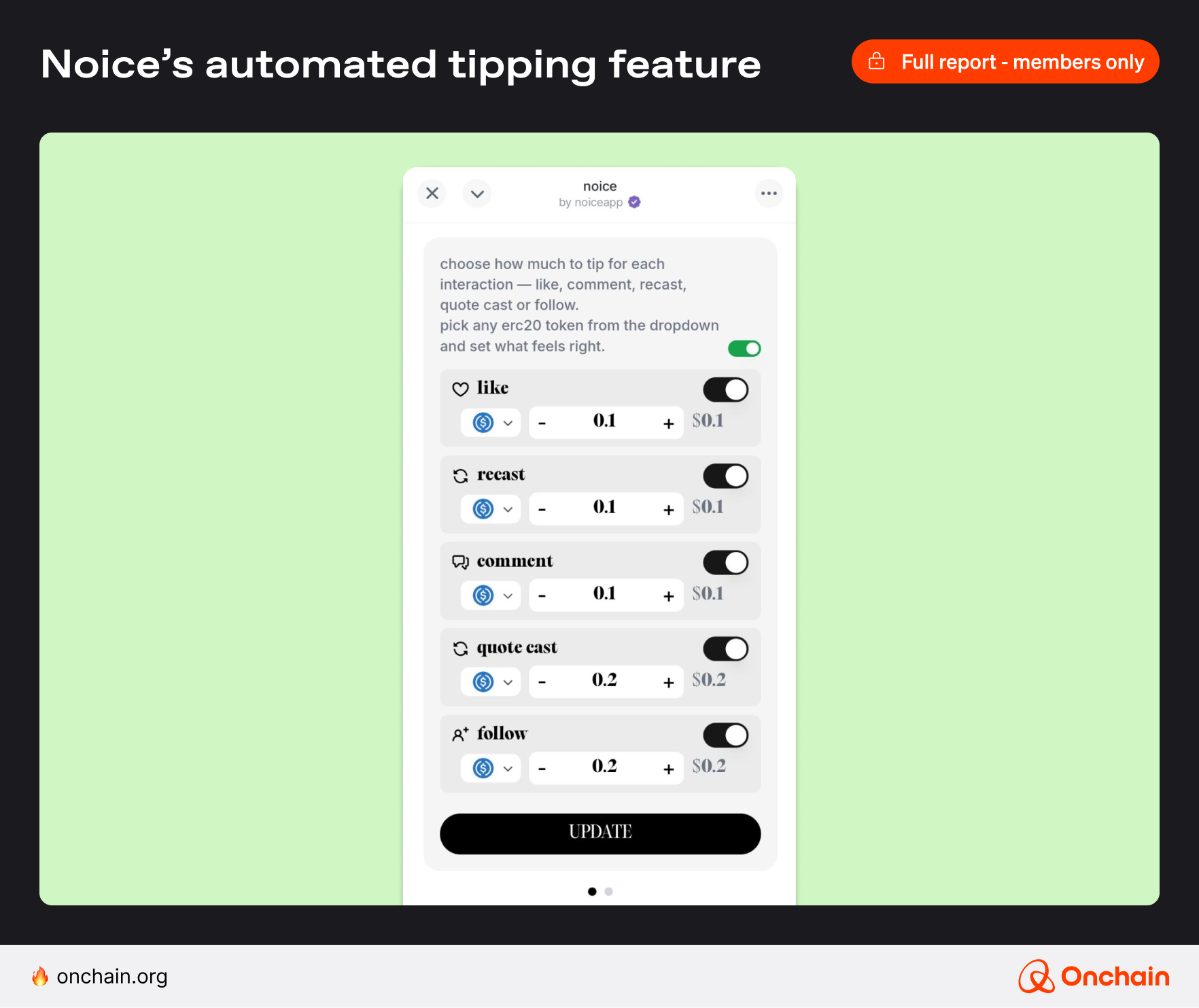

Key features include:
💬 Request pricing: Set a price for likes, comments, DMs, or even 1:1 calls.
🏆 Top tipper rewards: Daily bonuses like tip the most, earn 100 USDC.
🔥 Super tips: Boost tips with phrases like “ok banger” for extra flair and value.
This simply means as a creator, your timeline receives tips as you interact with your audience. Creator tokens and planned integrations allow users to build full tokenized economies around their content, potentially creating new income streams as a result.
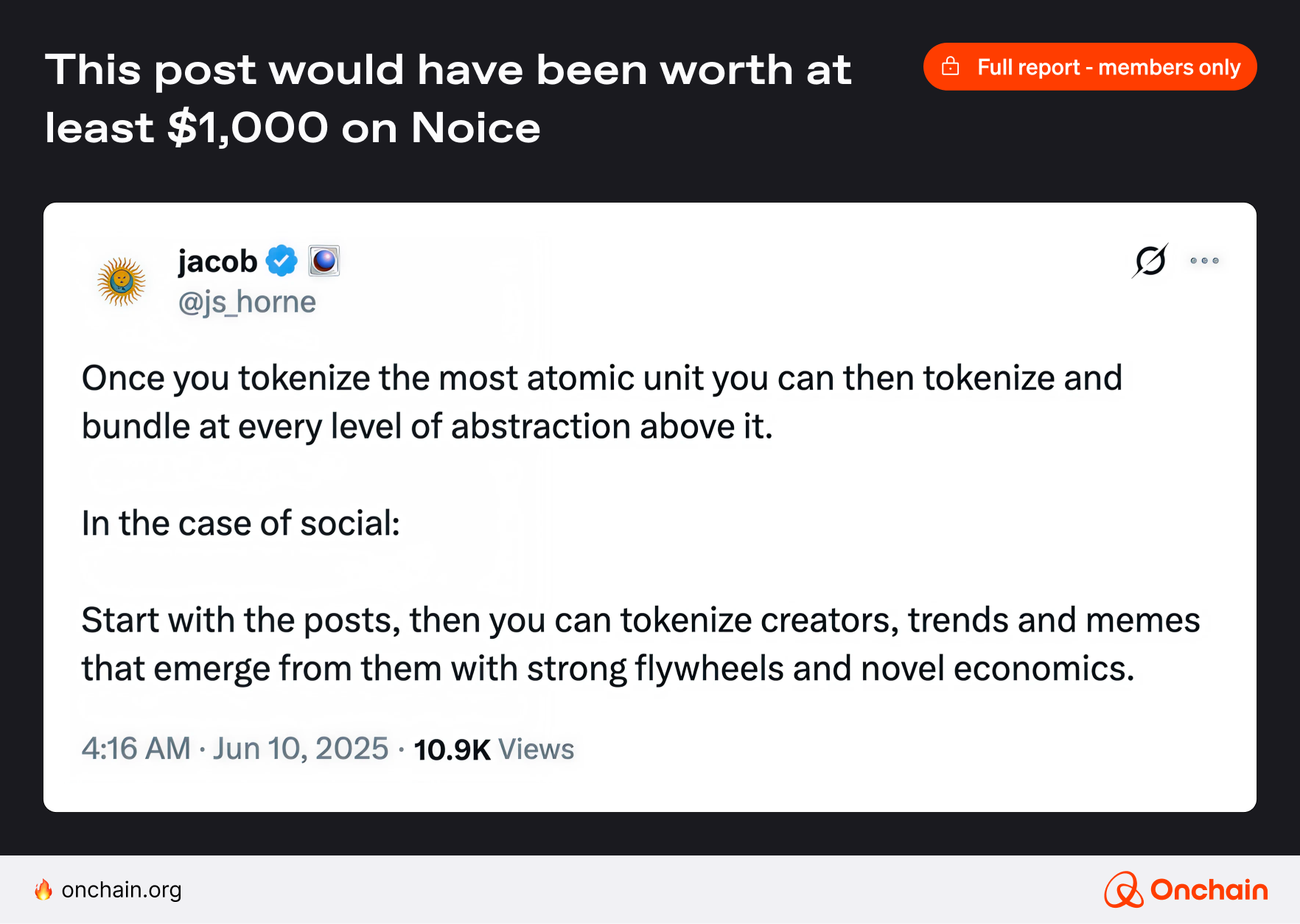
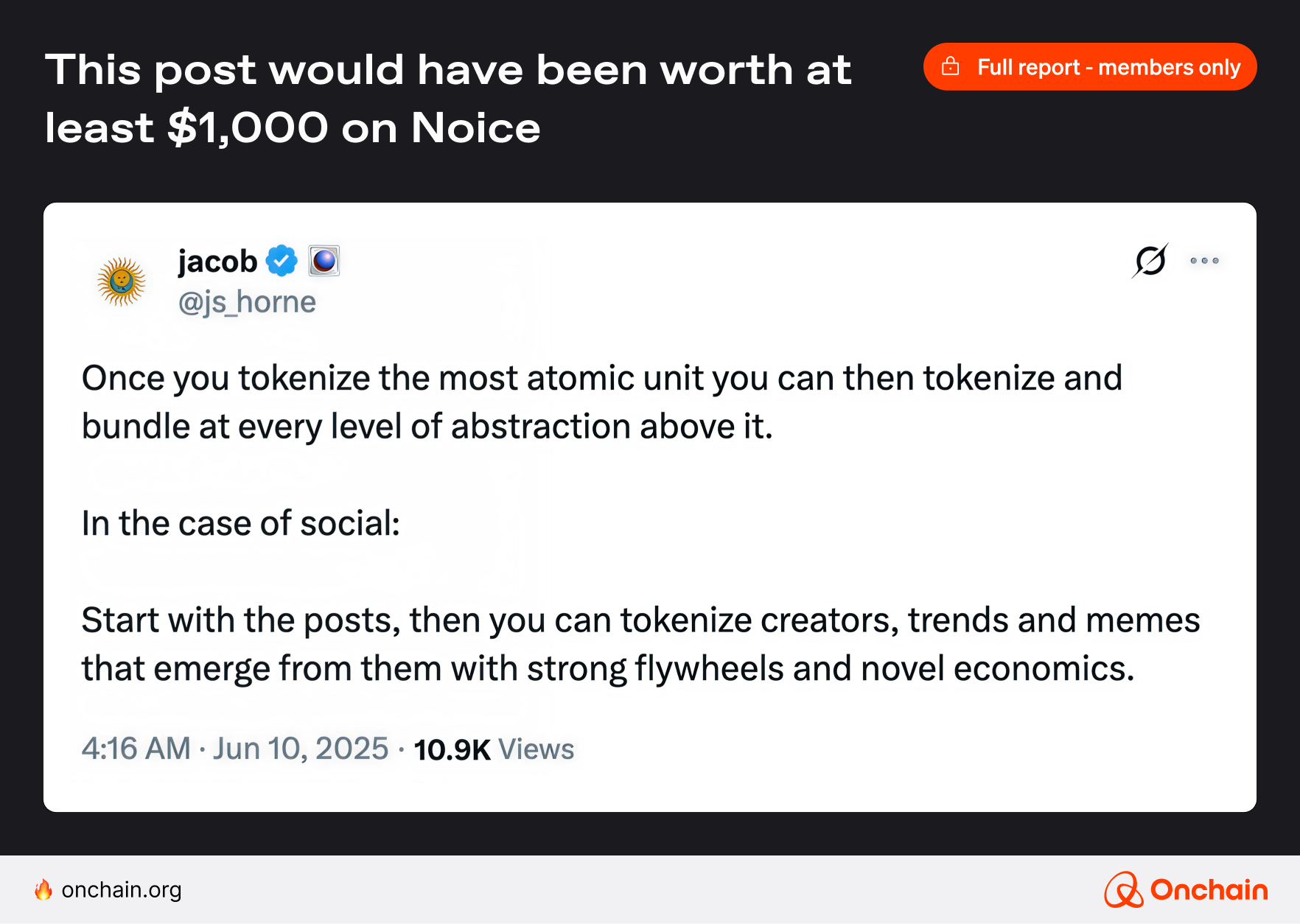
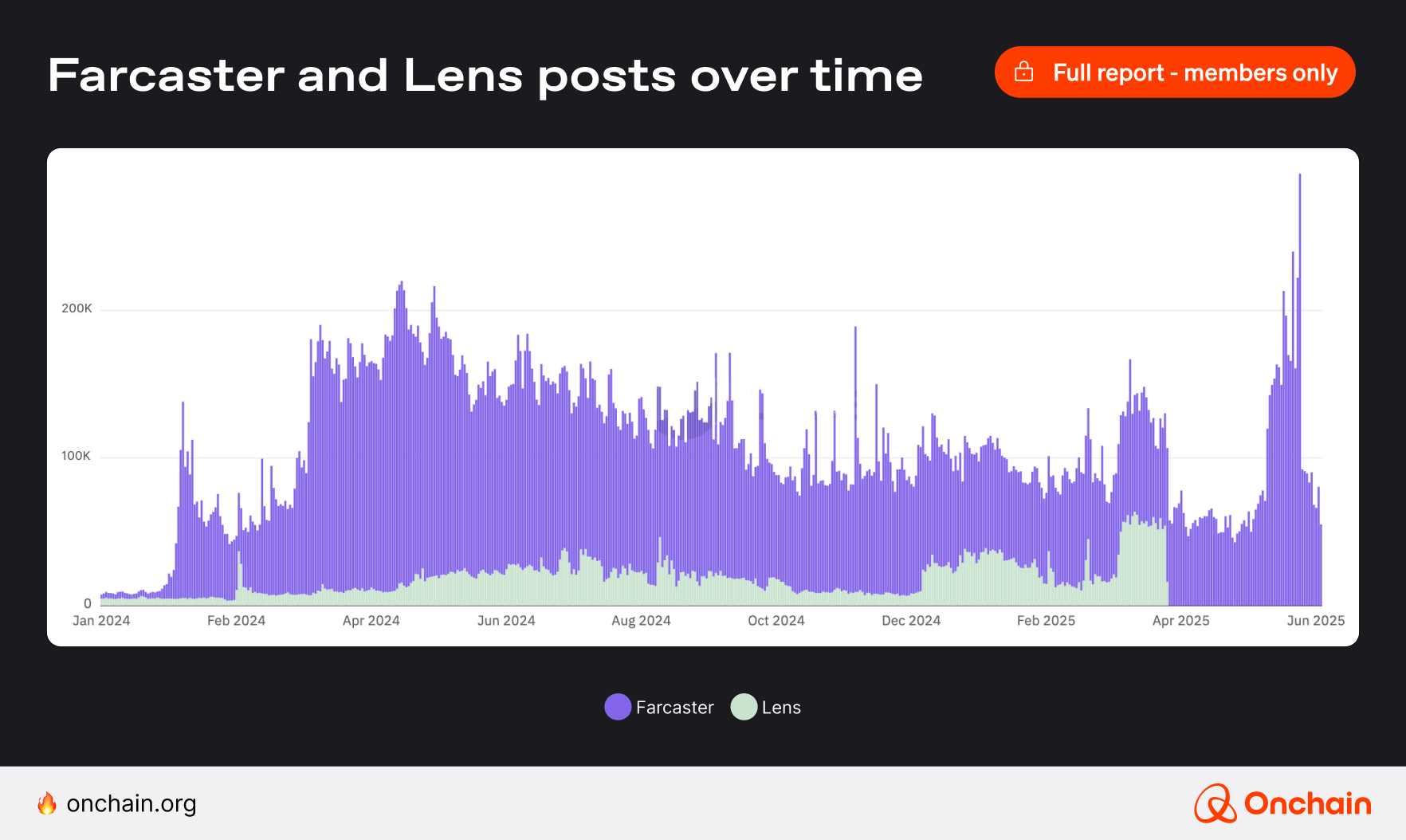
What Farcaster got right. Noice is just one part of the growing Farcaster ecosystem, which has gained momentum in the past year. With over 900K users and 183K daily casts, Farcaster is a serious challenger to other social platforms in Web3.

In May, Farcaster launched its Pro subscription for 120 USDC/year. The first 10,000 subscribers received a limited-edition commemorative NFT, a masterclass move that raised $1.2M in USDC and built a premium user base.
✅ All subscription fees go to creators and developers weekly, fueling a sustainable ecosystem.
✅ The NFT had no utility, just status, avoiding overhype while rewarding early adopters.
✅ The framing as a “commemorative” item gave it collectible value without empty promises.
Through this strategy, Farcaster avoided the pitfalls that killed other objects.
👉 Want the full breakdown? Explore our deep dive on Farcaster from our Decentralized Social Media research.
Farcaster leverages its mini-app model through Frames and allowed developers to build lightweight, interactive apps that run directly inside the platform. Frames can power everything accessible within the feed:
- NFT mints
- Polls
- Token-gated content
- Onchain payment
- Content tipping like Noice.so
- Marketplaces, among others
This Farcaster-native model offers a sweet spot: The reach of a social platform without the uniformity of a marketplace. This means founders and ecosystem builders benefit from network effects while maintaining control over their products, getting the best of both worlds.
Farcaster is one of the few Web3 social protocols with real product-market fit. The mini-app ecosystem is still early, but it’s a massive opportunity for builders ready to act.
🎬 Creator tip
Stay ahead of the game. Strategic Noice integrations with Zora, X, and Solana could boost adoption.
💡 Key recommendation for founders
Build an infrastructure layer that amplifies creator earnings rather than competing with existing platforms:
- The social-first stack: build wallets → build social layer → use a mini-apps pipeline
- Programmable tipping infra: Create monetization tools for every interaction.
- Web3-native ad model: Replace ads with incentivized onchain minting campaigns.
IV. The strategic layer: Foundational thinking for onchain creators
⏰ TL;DR
A proper Web3 creator flywheel drives creation, retention, and protocol growth. Creators and fans both benefit from the shared upside of aligned incentives. But two major roadblocks stand in the way: the continued reliance on centralized platforms and a lack of funding and infrastructure to bring audiences onchain. Solving these gaps is key to helping creators stay, scale, and truly own their own social ecosystems.
Going back to the core question we posed at the beginning: How do creators win?
Our take: By applying these foundational principles and enforcing the three pillars, they can provide upsides (both for creators and fans) to organically bring, grow, and retain their audiences onchain.
These pillars operate through a recursive sequence and drive momentum towards the flywheel.
Creation, retention, and protocol stickiness keep the flywheel spinning
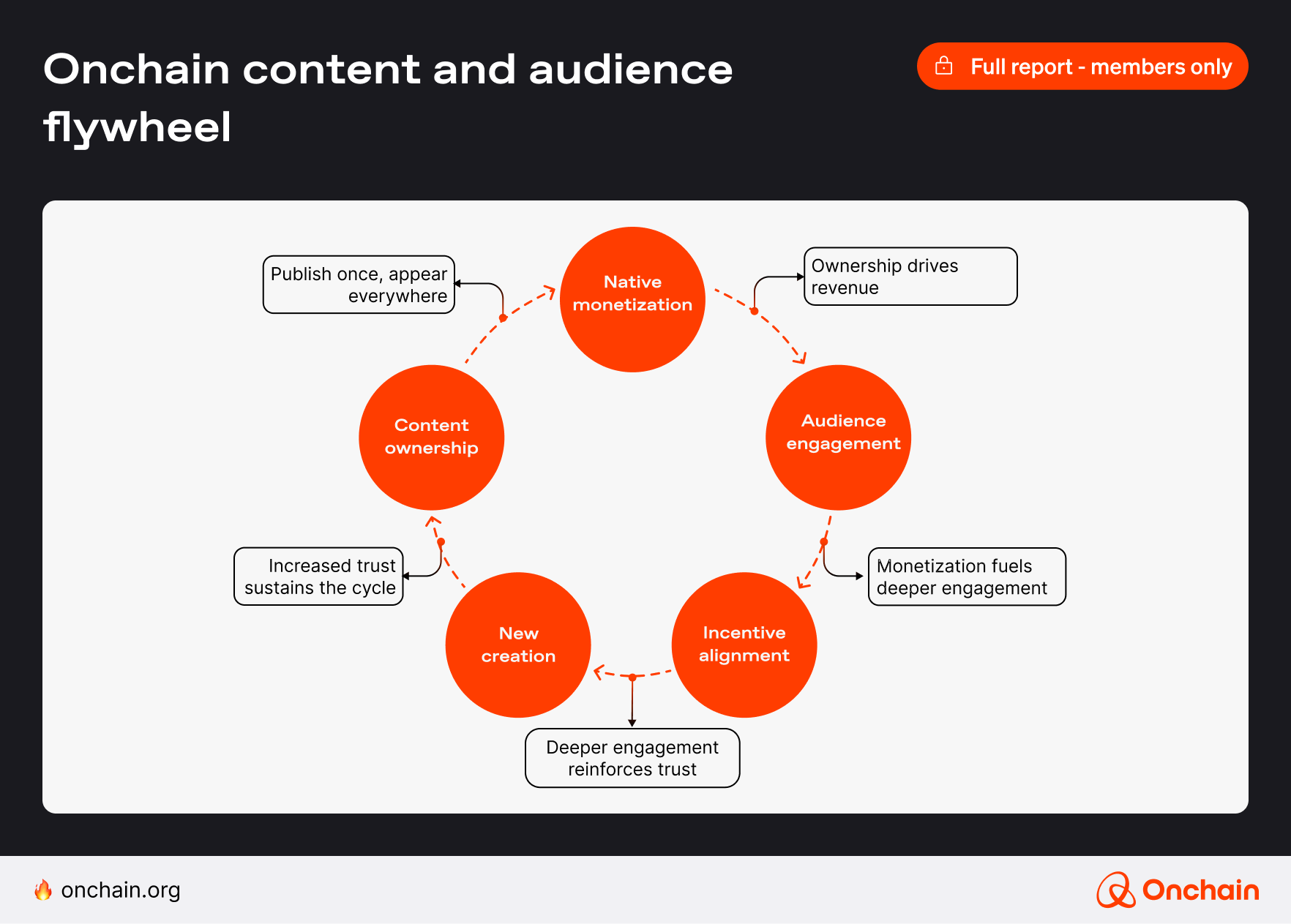

The flywheel shows a structural loop where each action reinforces the next. For creators and fans, the secret sauce is in the retention and protocol stickiness it builds over time: the more content and users accrue on a protocol, the harder it is to leave — not because of lock-in, but because of shared upsides.
🎬 Creator tip
If you’re new to Web3 and looking for support, here are a few key opportunities and tools to help you:
Frictions and current roadblocks
Despite the promises of Web3, several persistent pain points continue to hinder broader adoption by content creators.
Dependencies on centralized platforms remain. For most creators of Web3 content, X, Tiktok, and Youtube (long-form and shorts) are still a vital part of their growth engine funnel.
Most Web3 social and creator platforms still have relatively small user bases, which limits creators’ ability to reach large audiences and achieve meaningful engagement or income. As one community member pointed out, for a new project to reach communities, choosing between Coinmarketcap with 2.8M daily visits over Farcaster’s 17K is a no-brainer.
As a result, creators often remain dependent on their existing Web2 audience or leverage platforms with an established user base to drive traffic and visibility, undermining the full transition to onchain ecosystems.
Bridging challenges. Creators going onchain often face a harsh reset because they lose access to their existing audiences and revenue streams. Technical friction (e.g., wallet UX and onboarding complexity) makes it even harder for non-crypto-native creators to migrate or bring communities with them.
“We don’t need more Web3-native creators — we need to bridge to where real consumers are: TikTok, YouTube, Instagram. These platforms have the reach, the algorithms, and the users who actually consume content instead of just producing it. The problem? Crypto content is highly censored, making it hard for creators to break through or scale.”
- @HeroOfEther, Hero of Growth at Onchain
More importantly, funding for cross-platform bridging tools has stalled; VCs are skeptical of protocols that lack user traction. Without stronger collaboration across decentralized platforms, the ecosystem risks fragmenting before it scales.

“If a project founder right now came to a VC and said “Hey, we are building a bridge between Farcaster, Lens, Mastodon, Bluesky, Twitter, Facebook,” they were like “Oh, it doesn’t have too much value because people are not using your protocol.” It’s having a hard time especially for these people trying to merge the difference … That’s a huge concern if this small community does not collaborate.”
- Suji Yan, Founder and CEO of Mask Network, “Why Decentralized Social Media is 100x Bigger Than DeFi” - https://www.youtube.com/watch?v=Psr4j_MkijU&t=659s
What are the unmet needs in the space?
Despite rapid innovation, significant gaps remain in the Web3 creator stack. They also represent attractive whitespace opportunities for founders and builders.
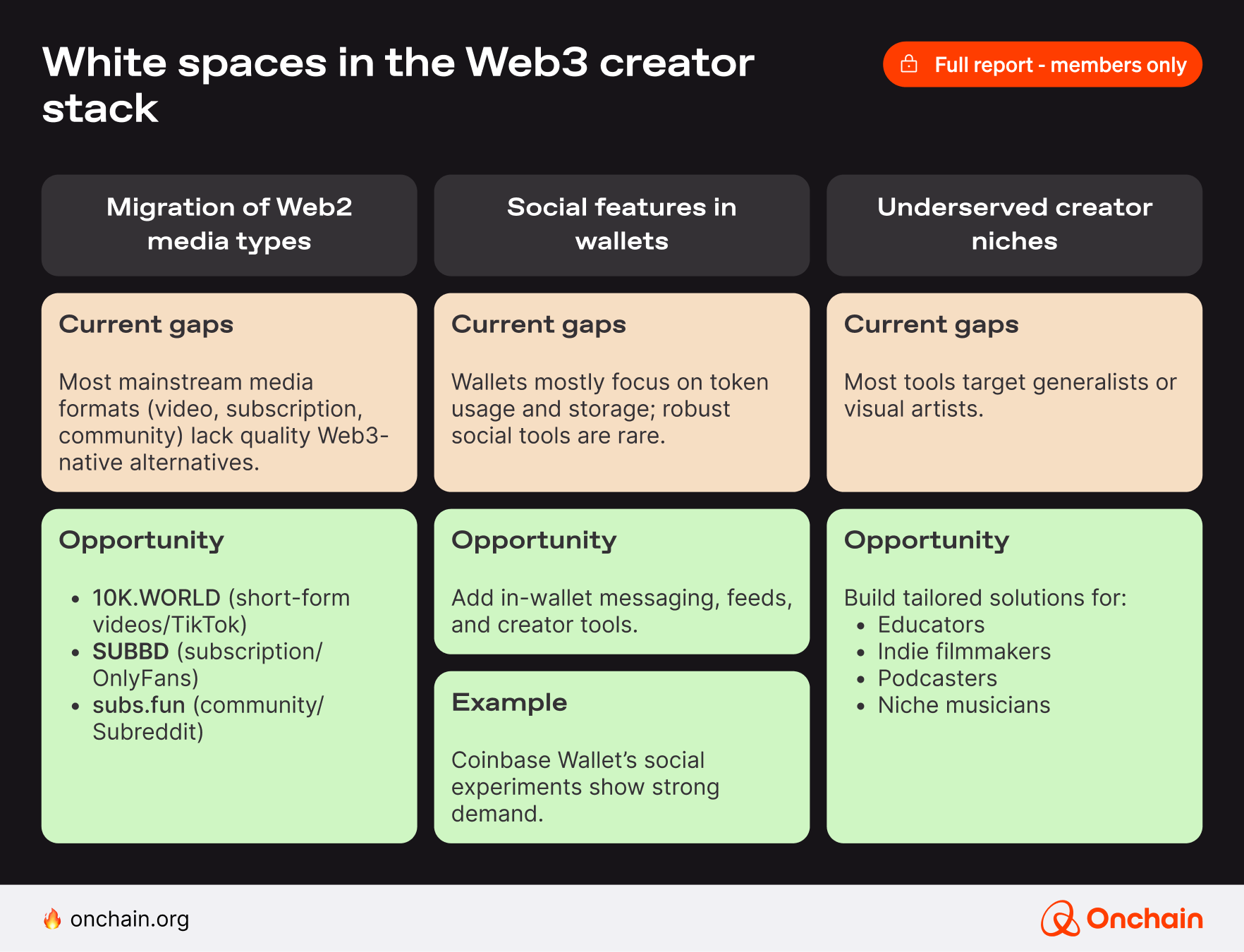

These gaps show where the opportunities are: In building the next generation of creator tools that are interoperable, user-friendly, and tailored to the unique needs of diverse creator segments. Solving these challenges will be key to spinning the Web3 creator flywheel at scale.
Strategic playbook for founders
We at Onchain put together a tactical guide for founders, builders, and creators shaping the next generation of onchain media and monetization.
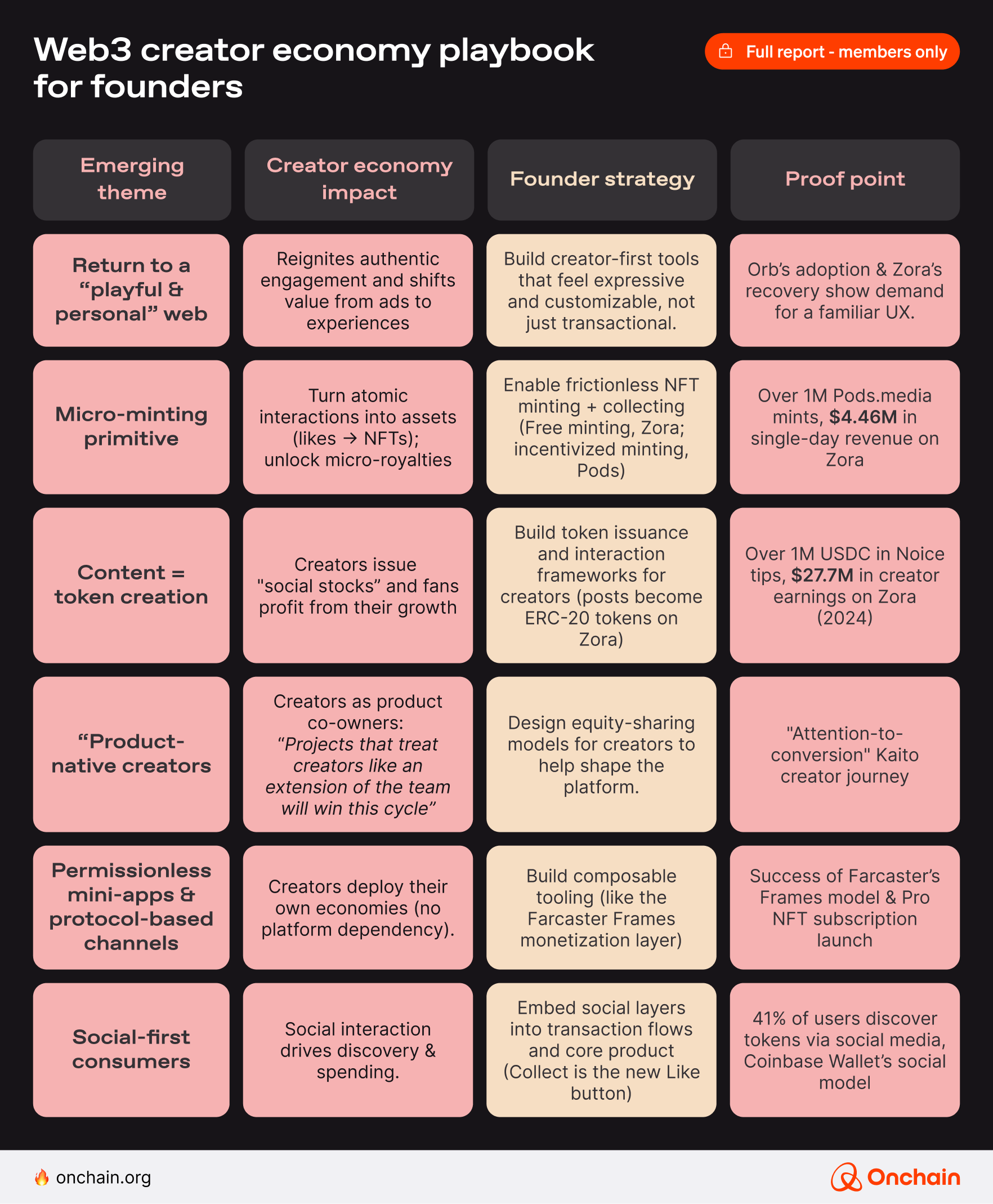
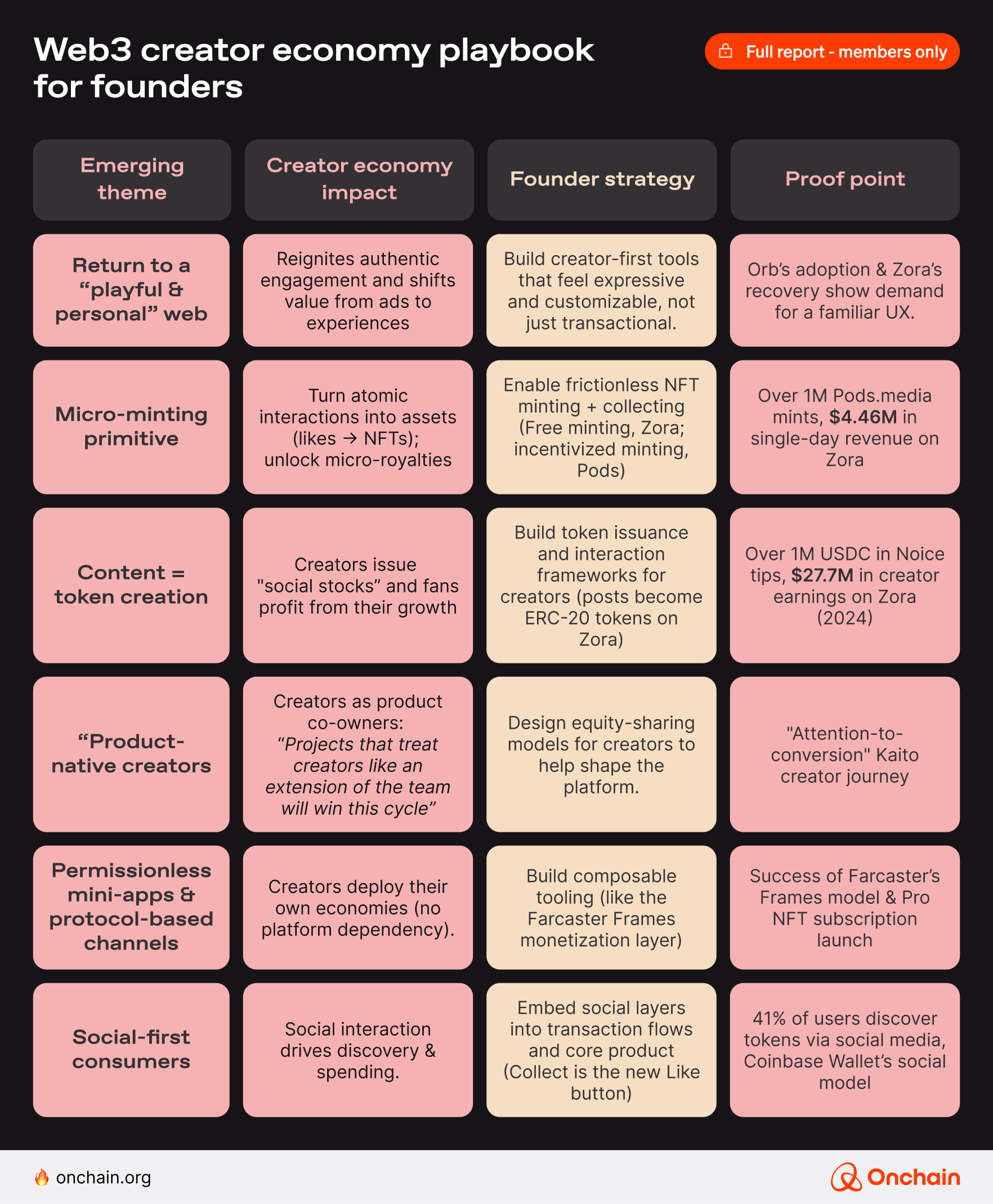
The internet is at the threshold where creators finally own their distribution, audiences share the upside with creators, and every interaction carries economic weight.
The question now isn’t whether Web3 will transform creator economies in the years ahead. These platforms are already proving the model can work with the right execution. The real question is whether we’re ready for a world where every piece of content is a tradeable asset, every fan is an investor, and creativity becomes the ultimate form of social currency.
Bring your audience Onchain
This is your edge: As a member of Onchain, you’re writing the next chapter of the creator economy. If you found value in this exclusive report, share it with your network. Invite your fellow creators, founders, and visionaries to join our Onchain community and accelerate the flywheel together.
The next viral wave starts with you. Who will you bring onchain?
Share this report, spark the conversation, and help us build a network where creators and fans own the upside.
Sharing this with someone new to Onchain? Don’t worry — they can still become a Founding Member by purchasing the membership NFT on OpenSea.
Together, let’s make onchain culture unstoppable.
Methodology
The research was guided by a deductive methodology, designed to test the hypothesis that decentralized social and Web3 platforms are opening new avenues and experiences for content creator communities today. By blending quantitative data with qualitative insights, the study aimed to evaluate their transformative potential for social and financial ecosystems, focusing on their impact on both businesses and consumers.
This report was primarily based on desk research, drawing from a wide range of secondary sources including articles, industry reports, product testing, expert testing and community feedback, and data-driven analyses of Web3 business models and consumer behavior.
All relevant sources are cited in-text throughout the report.
Data collection and analysis
- Quantitative analysis
- Data scope: The report analyzes user activity, minting behavior, token rewards, creator earnings, and protocol revenue across Web3 creator platforms (e.g., Farcaster, Orb Club, Zora, Pods.media, Noice, Kaito AI) from 2024 to mid-2025.
- Key metrics: Focus areas include tokenized content volume, engagement ratios (e.g., daily casts, mindshare scores), monetization efficiency (e.g., royalty splits, tips in USDC), and network growth indicators (e.g., new mints, collector counts).
- Outcome: Demonstrates how Web3 primitives—ownership, engagement, and monetization—enable creators to earn sustainably, engage audiences directly, and bootstrap creator-led ecosystems.
- Case studies
- Selected examples:
- Orb Club: Highlights a shift from likes to NFT sticker reactions, embedding IP ownership and creator royalties into social expression.
- Zora: Showcases cultural tokenization at scale, with every post minted as a tradeable asset and tracked for ownership and speculation.
- Pods.media: Demonstrates direct podcast monetization through NFT collection, tipping, and post-level sponsorship.
- Noice: Embeds monetization into Farcaster interactions using programmable “atomic tipping” and request-based pricing.
- Kaito AI: Introduces tokenized attention as social capital, with “Yaps” rewarding high-impact content across decentralized networks.
- Purpose: To illustrate how creator-focused platforms are redesigning economic and engagement models using onchain primitives and community-aligned incentives.
- Selected examples:
- Classification of creator platforms
- Framework used: Platforms are analyzed along three core pillars — ownership, monetization, and engagement — mapped to the Web3 creator flywheel. Additional segmentation includes SocialFi vs. InfoFi dynamics and onchain-native monetization mechanics.
- Relevance: This structure enables a comparative analysis of how emerging platforms unlock new opportunities and flywheel effects for creators across verticals (e.g., audio, research, micro-content).
- Secondary sources
- Literature review: Includes references from market research (Polaris, Mighty Networks), user behavior studies (VestPi KOL data, token launch surveys), and platform-level analytics (Dune dashboards, Zora protocol metrics, Farcaster usage stats). Monetization benchmarks and cultural token case studies are integrated to ground findings in a broader context.